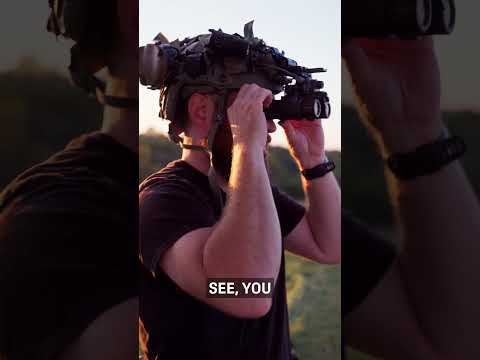
Achieving Predator Vision?

Published on November 17, 2025
Duration: 1:30

This video demonstrates the concept of 'Predator Vision' by combining thermal and night vision technologies. It highlights the Falcon 640 V2 thermal monocular and the MUM-14 white phosphor night vision monocular, showcasing their features and versatile mounting options for seamless integration onto helmets and weapons. The presenter, identified as a FalconClaw product expert, details the technical specifications and mounting hardware, emphasizing the advantages of dual-spectrum observation for enhanced target detection and navigation.

Quick Summary

Dual-band spectrum vision combines thermal imaging (heat) and night vision (infrared light) for enhanced target detection and navigation. Key components include the Falcon 640 V2 thermal monocular and the MUM-14 white phosphor night vision monocular, which can be mounted on helmets or weapons using specialized bridges and adapters.

Chapters

  1. 00:00Introduction to Dual-Band Vision
  2. 00:23Falcon 640 V2 Thermal Monocular
  3. 00:32MUM-14 Night Vision Monocular
  4. 00:49MUM-14 Technical Features
  5. 01:02Mounting Systems and Versatility

Frequently Asked Questions

What is dual-band spectrum vision?

Dual-band spectrum vision combines thermal imaging, which detects heat signatures, with night vision, which amplifies infrared light. This fusion allows users to see both heat sources and ambient light conditions simultaneously, enhancing target detection and navigation in low-light or obscured environments.

What are the key components for achieving 'Predator Vision'?

Achieving 'Predator Vision' involves integrating a thermal monocular like the Falcon 640 V2 with a night vision monocular such as the MUM-14. These devices can be mounted on helmets or weapons using specialized bridges and adapters for seamless operation.

What are the advantages of the MUM-14 night vision monocular?

The MUM-14 features white phosphor technology for clearer imagery, is waterproof up to 20 meters for two hours, and offers a flexible power system accepting CR123 or AA batteries. It is also noted for being smaller and lighter than previous models like the PVS-14.

How can thermal and night vision devices be mounted for tactical use?

Versatile mounting solutions are crucial. Systems include dual bridges (like the QDB) for mounting two devices, weapon mounts (like the QDF), and helmet mounts (Dovetail with QDA adapters) that allow for quick attachment and detachment.

More Tactical & Gear Videos You Might Like

More from FalconClaw

View all →