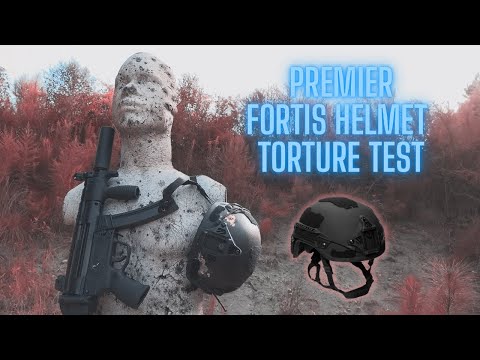
Ballistic Helmet vs Desert Eagle

Published on April 28, 2023
Duration: 4:21

This expert-level analysis details a ballistic helmet's performance against various handgun calibers, culminating in a test with a .50 AE Desert Eagle. The Protection Group Denmark helmet, constructed from Aramid fibers, significantly outperformed a Chinese HDPE helmet, demonstrating minimal back face deformation even with powerful rounds. The instructor highlights the importance of helmet construction materials and their impact on survivability.

Quick Summary

The Protection Group Denmark Aramid fiber ballistic helmet successfully stopped a .50 AE round from a Desert Eagle, demonstrating significant protective capabilities beyond its typical rating. Although severe back face deformation occurred, it was deemed potentially survivable, highlighting the helmet's robust construction.

Chapters

  1. 00:12Ballistic Helmet Test Intro: PGD vs. Chinese Helmet
  2. 00:3932 ACP Test on Ballistic Helmet
  3. 01:02Helmet Bungees Explained
  4. 01:149mm Ammunition Test
  5. 01:379mm Test Results: Back Face Deformation
  6. 02:03Helmet Wearability After 9mm Impacts
  7. 02:087.62x25mm Test on Ballistic Helmet
  8. 02:487.62x25mm Test Results: Unexpected Performance
  9. 03:08Desert Eagle .50 AE Test Intro: Helmet Not Rated
  10. 03:38.50 AE Test Results: Severe Deformation
  11. 04:06Ballistic Helmet Conclusion: Superior Performance

Frequently Asked Questions

How did the Protection Group Denmark ballistic helmet perform against a .50 AE Desert Eagle round?

The Protection Group Denmark Aramid fiber ballistic helmet successfully stopped the .50 AE round from a Desert Eagle. While it resulted in severe back face deformation, this was considered potentially survivable, showcasing the helmet's robust protection beyond its rated specifications.

What is the significance of back face deformation in ballistic helmet testing?

Back Face Deformation (BFD) measures how much the inner surface of a helmet indents after a ballistic impact. Excessive BFD can cause serious blunt force trauma to the wearer's head, even if the helmet prevents penetration, making it a critical factor in assessing survivability.

How does Aramid fiber compare to HDPE in ballistic helmet construction?

Aramid fibers (like Kevlar) offer superior ballistic protection and are generally used in higher-performance helmets. HDPE, while lighter and cheaper, provides less ballistic resistance and typically results in more back face deformation, as demonstrated in the comparison test.

Can a NIJ Level 3A ballistic helmet stop rifle rounds?

NIJ Level 3A ballistic helmets are primarily rated for handgun calibers. While some rifle rounds like the 7.62x25mm tested showed less impact than expected, other rifle calibers can easily penetrate Level 3A armor, meaning these helmets are not designed for rifle threats.

Related News

All News →

More Tactical & Gear Videos You Might Like

More from Polenar Tactical

View all →