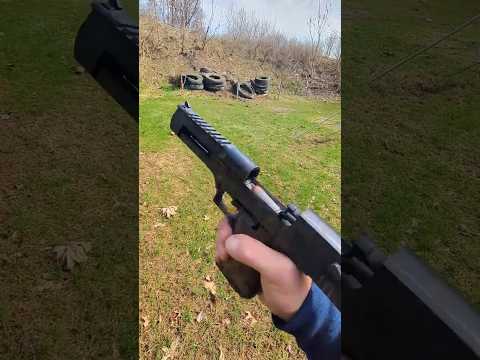
Desert Eagle 50 AE vs Ballistics Gel

Published on August 4, 2017
Duration: 5:55

This guide details the process of conducting terminal ballistics testing using a Desert Eagle .50 AE and Clear Ballistics gel, as demonstrated by Kentucky Ballistics. It covers preparation, live-fire, and post-shot analysis, including measuring penetration, wound channel, projectile weight retention, and expansion. The demonstration highlights the significant power of the .50 AE cartridge.

Quick Summary

The Desert Eagle .50 AE, tested with Underwood Ammo in Clear Ballistics gel, showed impressive terminal performance. The 300gr JHP penetrated 26.5 inches with excellent expansion (.832"), while the 325gr JHP penetrated 23 inches with comparable expansion (.836") and slightly better weight retention.

Chapters

  1. 00:14Introduction & Test Setup
  2. 00:43Ammunition Overview
  3. 01:01300 Grain JHP Firing & Test
  4. 01:50300 Grain JHP Results Analysis
  5. 02:32325 Grain JHP Firing & Test
  6. 03:04325 Grain JHP Results Analysis
  7. 03:38Projectile Measurement & Weight Retention

Frequently Asked Questions

What are the terminal ballistics results for the Underwood 300gr JHP .50 AE fired from a Desert Eagle?

The Underwood 300gr Bonded JHP .50 AE achieved approximately 26.5 inches of penetration in 48 inches of 10% ballistics gel. The wound channel extended to 28 inches, and the bullet showed excellent expansion, retaining 298.2 grains of its original weight and expanding to .832 inches.

How did the Underwood 325gr JHP .50 AE perform in ballistics gel testing?

The Underwood 325gr Bonded JHP .50 AE penetrated roughly 23 inches in 10% ballistics gel, creating a large temporary cavity. It experienced some fragmentation, retained 303.2 grains of its weight, and expanded to .836 inches.

What equipment is needed for a ballistics gel test like the one shown?

Essential equipment includes the firearm being tested (e.g., Desert Eagle .50 AE), standardized ballistics gel (like 10% Clear Ballistics), ammunition (e.g., Underwood Ammo), a measuring tape for penetration depth, a digital scale for weight retention, and digital calipers for measuring projectile expansion.

What is the significance of measuring weight retention and expansion in ballistics testing?

Measuring weight retention and expansion provides critical data on a bullet's terminal performance. High weight retention indicates structural integrity, while significant expansion increases the wound channel diameter, enhancing stopping power and energy transfer upon impact.

Related News

All News →

More Tactical & Gear Videos You Might Like

More from Kentucky Ballistics

View all →