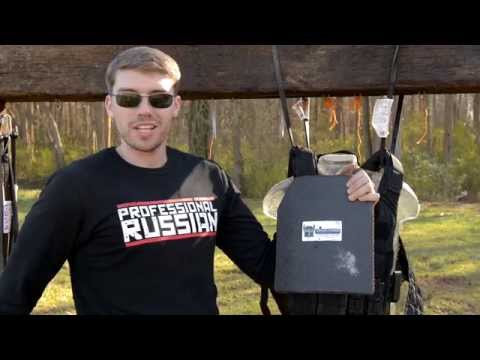
RTS Tactical Level III Armor Test

Published on June 8, 2020
Duration: 12:33

This video provides a technical assessment of RTS Tactical's Level III AR500 steel body armor plates. The test involved shooting the plates at 40 yards with various rifle calibers, including 5.56x45mm (55gr FMJ and 62gr Green Tip), 7.62x39mm (123-124gr FMJ and soft point), and .308 Winchester (7.62x51mm equivalent and 175gr Berger). The armor demonstrated significant durability, with no penetration observed across all calibers. The speaker, an experienced firearms instructor, highlights the importance of projectile velocity against steel and recommends trauma pads for mitigating blunt force trauma from heavy impacts.

Quick Summary

RTS Tactical Level III AR500 steel body armor plates were tested at 40 yards with 5.56x45mm, 7.62x39mm, and .308 Winchester rounds. All calibers failed to penetrate the plates, demonstrating significant durability and robustness for civilian use. The thin rubber coating is not spall protection; true spall containment requires a specialized coating.

Chapters

  1. 00:00Video Introduction & Context
  2. 00:47Previous Test Issues & Re-shoot
  3. 01:28RTS Tactical Plate Overview
  4. 02:46Spall Protection Discussion
  5. 03:25Ammunition & Firearm Details
  6. 04:38Rifle Barrel Lengths
  7. 05:10Impact Analysis: 5.56
  8. 06:49Impact Analysis: 7.62x39
  9. 08:02.308 & Trauma Pads
  10. 10:25Conclusion & Future Tests

Frequently Asked Questions

How did RTS Tactical Level III AR500 steel plates perform under rifle fire?

The RTS Tactical Level III AR500 steel plates were tested at 40 yards with 5.56x45mm, 7.62x39mm, and .308 Winchester rounds. All calibers failed to penetrate the plates, demonstrating significant durability and robustness for civilian use.

What is the difference between the plate cover and actual spall protection?

The thin rubber coating on the RTS Tactical plate is not spall protection; it's a basic cover. True spall protection requires a specialized build-up coating designed to contain bullet fragments upon impact, preventing them from scattering.

Which rifle calibers were used to test the RTS Tactical body armor?

The test included 5.56x45mm (55gr FMJ and 62gr Green Tip), 7.62x39mm (123-124gr FMJ and soft point), and .308 Winchester (7.62x51mm equivalent and 175gr Federal Gold Medal Berger) rounds.

Does projectile speed or weight matter more against steel body armor?

According to the firearms instructor, projectile velocity is a key factor in defeating steel armor. Faster rounds, like 5.56x45mm FMJ, can be more effective than heavier, slower rounds due to the increased kinetic energy transfer upon impact.

More Tactical & Gear Videos You Might Like

More from Copper Jacket TV

View all →