What Nobody Tells You About Night Vision

Published on March 10, 2023
Duration: 29:51

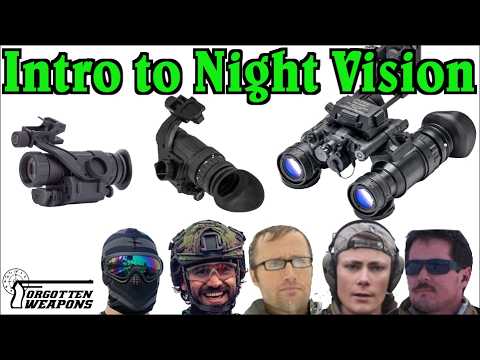
This video provides a deep dive into the practical application and limitations of night vision (NVG) technology, moving beyond basic gear reviews. It details how varying light conditions (bright, intermediate, dark, blackout) drastically affect NVG performance and aiming strategies. The content emphasizes the trade-offs between passive and active aiming, the visibility of laser signatures, and the critical importance of light discipline and signature management in tactical scenarios.

Quick Summary

Night vision performance varies greatly with lighting. Bright conditions allow effective passive aiming, while intermediate light favors active aiming. Dark conditions limit passive range significantly, requiring powerful IR illuminators. Blackout conditions necessitate active IR illumination, turning your device into a visible light source.

Chapters

  1. 00:00Introduction: Experience Under Goggles
  2. 01:34Context: Grid Down & Self-Defense Scenarios
  3. 04:02Lighting Conditions: Bright
  4. 07:35Lighting Conditions: Intermediate
  5. 09:01Lighting Conditions: Dark
  6. 11:42Lighting Conditions: Blackout
  7. 13:45Emissions: Passive vs. Active Aiming
  8. 16:44Laser Signatures & Misconceptions
  9. 21:12VCEL vs. Standard Laser Illuminators
  10. 23:36Ground Splash & White Light Comparison
  11. 27:32Conclusion: Adapting to Conditions

Frequently Asked Questions

How do different lighting conditions affect night vision performance?

Bright conditions allow excellent passive aiming with red dots. Intermediate light degrades contrast, limiting passive aiming to ~75 yards and favoring active aiming. Dark conditions increase NVG noise, reducing passive range to 30-40 yards, requiring powerful illuminators. Blackout requires active IR illumination entirely.

What are the signature considerations for passive vs. active aiming with night vision?

Passive aiming's main emission is muzzle flash upon firing, visible from afar. Active aiming (lasers) provides a constant light signature, but civilian lasers are often directional orbs, not visible beams, unless environmental factors are present.

Are civilian laser pointers visible under night vision?

Civilian laser pointers are typically not visible as a beam unless there's high humidity, dust, or smoke. The primary signature is an 'orb' at the source, which is highly directional and faint from off-axis angles.

What is the difference between VCEL and standard laser illuminators for NVGs?

VCEL illuminators are brighter and civilian-legal but create a wide, obvious 'flood' signature similar to a flashlight. Standard lasers produce a more focused, directional 'orb' signature, which can be less detectable from certain angles.

More Tactical & Gear Videos You Might Like

More from Brass Facts

View all →