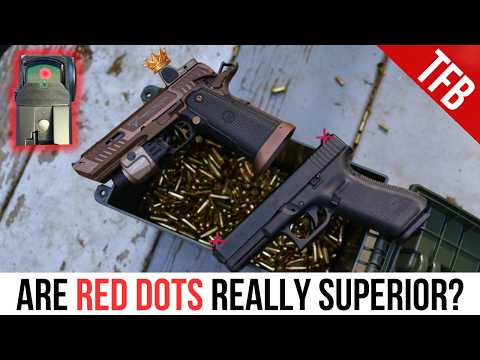
Are Cowitness Iron Sights Actually Useful?

Published on May 20, 2026
Duration: 10:01

This video addresses the utility of cowitness iron sights when using a red dot optic for competition. The instructor, Joel Park, argues against their necessity, citing personal experience where backup iron sights have failed more frequently than red dots. He demonstrates how significant optic window movement can make finding a red dot difficult, suggesting that if one can't find the dot, they likely won't find the irons either. The focus should be on developing a consistent draw stroke and indexing to the target.


Quick Summary

Firearms instructor Joel Park advises against relying on cowitness iron sights with red dot optics. He notes that backup irons fail more frequently than red dots and that if a red dot is lost, finding the irons will also be difficult due to optic window movement. Effective training focuses on consistent draw strokes and target indexing, not on crutch sights.

Chapters

  1. 00:00Listener Question: Cowitness Irons?
  2. 00:16Demonstrating Cowitness Setup
  3. 00:39The Idea Behind Cowitness
  4. 00:58Iron Sight Failure Rates
  5. 01:14Optic Window Movement Demo
  6. 01:47Finding Sights vs. Finding Dot
  7. 02:13Draw Stroke Techniques
  8. 02:52Developing Indexing Skills
  9. 03:15Shooting Without Sights
  10. 03:52Final Verdict on Cowitness
  11. 04:03Behind the Scenes: Why Irons Are Present
  12. 04:45Conflicting Information & Red Dot Training
  13. 05:36Conclusion: Are Irons Worth It?

Frequently Asked Questions

Are cowitness iron sights necessary when using a red dot optic for competition?

According to firearms instructor Joel Park, cowitness iron sights are generally not necessary and can even be detrimental. He has observed iron sights failing more often than red dots and argues that if you can't find your red dot, you'll likely struggle to find your irons too. The focus should be on developing a consistent draw and indexing.

What are the common failure points for backup iron sights on firearms?

Common failures for backup iron sights include the front sight becoming loose, crooked, or detaching completely from the slide. This can happen during shooting drills or competition, sometimes requiring a search to recover the lost sight.

How does optic window movement affect sight acquisition with a red dot?

Optic window movement can be significant. If the red dot is not centered, it can disappear from view entirely when the pistol is moved even slightly. This means that if you can't find the dot, you'll have to move the pistol considerably, making it equally difficult to find cowitnessed iron sights.

What is the recommended approach for sight acquisition with a red dot optic?

The recommended approach is to focus on a consistent draw stroke and developing good indexing. Instead of looking for the sights, focus on the target and allow the pistol to come up naturally to your line of sight. This builds muscle memory and efficiency.

Related News

All News →

More Training & Techniques Videos You Might Like

More from Joel Park

View all →