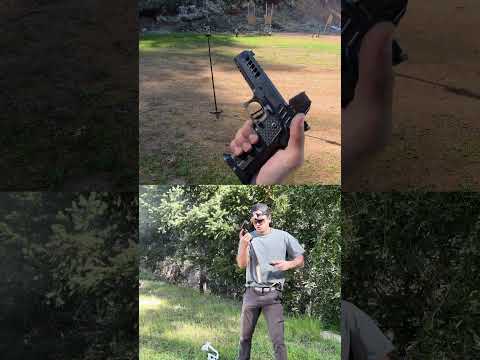
Do Compensators Help… or Hurt Your Shooting Progress?

Published on February 3, 2026
Duration: 16:35

Joel Park, a seasoned firearms instructor, clarifies that compensators and ports on pistols do not impede training progress. He emphasizes that while specialized gear like a modified Walther PDP might offer advantages, standard firearms are suitable for learning. The key takeaway is to focus on fundamental skills like grip and target acquisition, as these are more critical for overall improvement than specific firearm accessories. Students should bring reliable gear they actually use, along with essential accessories like a holster and extra magazines.

Quick Summary

Firearms instructor Joel Park states that compensators and ports on pistols do not hinder training progress. He advises students to bring reliable firearms they use regularly, along with a holster and 4-5 magazines. For rapid fire, a strong grip is more critical than precise trigger control for stability.

Chapters

  1. 00:00Compensators and Ports in Training
  2. 00:45Gear Comparison: Race Gun vs. Stock
  3. 05:10Instructor Perspective on Student Gear
  4. 09:15Grip vs. Trigger Press
  5. 11:30Prioritizing Bandwidth in Training

Frequently Asked Questions

Do compensators negatively impact firearms training?

According to firearms instructor Joel Park, compensators and ports on pistols do not hinder a student's ability to learn or an instructor's ability to teach. The firearm functions similarly for the student, and the focus remains on fundamental skills.

What gear is essential for a firearms training class?

For firearms training classes, the essential gear includes a reliable holster and a minimum of four to five magazines. While specialized firearms might be easier to shoot, they are not required for effective learning.

Should I bring my competition pistol to a training class?

Yes, firearms instructor Joel Park advises bringing the firearm you regularly use, whether for competition like USPSA/IDPA or concealed carry. The key is that the firearm is reliable and safe; expectations for speed and accuracy should scale with the gear.

What are the most important marksmanship fundamentals for rapid fire?

For rapid-fire shooting, Joel Park emphasizes that a stable grip becomes more crucial than trigger control alone. A good grip helps mitigate muzzle flip and keeps the firearm steady during the recoil cycle, allowing for faster follow-up shots.

More Training & Techniques Videos You Might Like

More from Joel Park

View all →