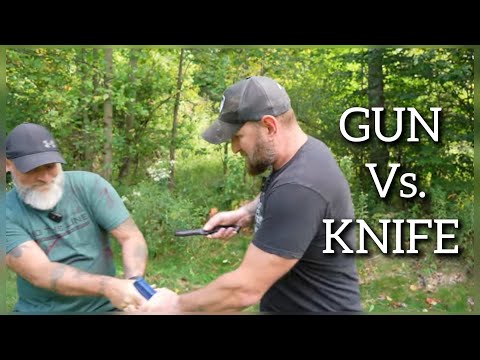
Force-On-Force Fridays: Dealing With Threats Behind Blind Corners with Navy SEAL "Tosh"

Published on May 13, 2022
Duration: 12:50

This video emphasizes the importance of force-on-force training to prepare for worst-case scenarios where situational awareness fails. Instructor Tosh and participant Miles discuss reacting to threats, particularly around blind corners, highlighting techniques like maintaining situational awareness, angling approaches, and the benefits of aggressive engagement over retreat in close quarters. The session also touches on legal considerations for deadly force and the practical challenges of firearm draws in a clinch.


Quick Summary

Force-on-force training is essential for practicing reactions when situational awareness fails, simulating worst-case scenarios to improve decision-making under stress. Key tactics include angling blind corners, aggressive engagement in close quarters, and understanding how carry positions affect firearm access.

Chapters

  1. 00:02Introduction to Force-on-Force Training
  2. 00:22Tosh Welcomes Viewers to Force-on-Force Friday
  3. 00:32Why We Do Force-on-Force Training
  4. 00:44Training for Worst-Case Scenarios
  5. 01:14Increasing Comfort in High-Stress Situations
  6. 01:57Scenario Setup: Walking Down the Street
  7. 02:29Participant Feedback: First Scenario
  8. 02:43Legal Considerations for Self-Defense
  9. 03:22Tactics for Walking Near Corners
  10. 04:37Personal Take: Creating Distance vs. Aggression
  11. 05:04Participant's Training on Movement
  12. 05:26Creating Space vs. Attacking the Attacker
  13. 06:06Belief in Attacking a Threat
  14. 06:39Overall Scenario Feedback
  15. 06:46The Cell Phone Dilemma
  16. 07:40Second Scenario Setup: Alleyway
  17. 08:17Participant Feedback: Second Scenario
  18. 09:17Importance of Moving Past Gun Skills
  19. 09:41Appendix Carry Pitfalls Highlighted
  20. 10:49Goals: Get Off the X, Take Initiative
  21. 11:13Lateral Movement and Angular Tactics
  22. 11:37Purpose of Force-on-Force Experience
  23. 12:00No Black and White Answers in Self-Defense
  24. 12:12Scenarios Based on Individual Factors
  25. 12:35Call to Action and Next Week's Video

Frequently Asked Questions

What is the main purpose of force-on-force training?

Force-on-force training is designed to simulate real-world, worst-case scenarios where your initial situational awareness may have failed. It focuses on training your immediate reactions and decision-making under high stress, helping you to pick up where your proactive awareness might have fallen short.

What tactical advice is given for approaching blind corners?

When approaching blind corners, especially in potentially dangerous areas, it's recommended to maintain situational awareness and give the corner a slight angle or a quick visual scan before proceeding. This proactive measure can help identify potential threats early.

When is aggressive engagement preferred over creating distance in a confrontation?

In close-quarters confrontations, particularly after an initial physical contact like a push, aggressive engagement is often advised over trying to create distance by backpedaling. This strategy aims to shift the initiative, forcing the attacker to react to your actions.

How does firearm carry position affect close-quarters combat?

Firearm carry position, such as appendix carry, can significantly impact drawing speed and ease in close-quarters combat. Being pinned or in a clinch can make drawing from an appendix position more difficult, highlighting the need to consider carry method implications.

More Training & Techniques Videos You Might Like

More from Tactical Hyve

View all →