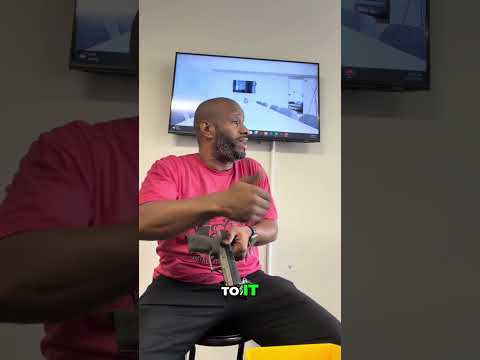
How to Zero a Red Dot Optic on a Pistol - Using a Bench Rest

Published on June 4, 2020
Duration: 4:52

This video details how to zero a red dot optic on a pistol using a bench rest for enhanced stability. It emphasizes zeroing at 25 yards to expose minor errors and recommends the Caldwell Pistolero for consistent shot placement. The guide covers optic adjustment calculations based on MOA and stresses the importance of precise trigger control for accurate grouping.

Quick Summary

Zeroing a pistol red dot optic at 25 yards is recommended for accuracy, as it exposes minor aiming errors missed at closer ranges. Using a stable bench rest like the Caldwell Pistolero minimizes shooter error, and each MOA click adjusts impact by about 1/4 inch at this distance.

Chapters

  1. 00:00Introduction to Zeroing Red Dots
  2. 00:24Choosing a Zeroing Distance
  3. 00:58Using a Bench Rest for Stability
  4. 01:16Target Selection and Grouping
  5. 01:57Optic Adjustment Mathematics
  6. 03:00Bench Rest Setup and Technique
  7. 03:34Trigger Control for Precision

Frequently Asked Questions

What is the best distance to zero a pistol red dot optic?

Zeroing a pistol red dot optic at 25 yards is recommended. This distance is superior because it helps expose minor aiming errors that might be hidden at closer ranges like 10 or 12 yards, ensuring a more precise zero.

How do you use a bench rest to zero a red dot?

A bench rest, like the Caldwell Pistolero, provides stability to eliminate shooter error during zeroing. It holds the firearm steady, allowing you to focus on the optic's adjustments and ensure accurate grouping for a precise zero.

How much does one MOA click adjust a red dot at 25 yards?

Most red dot optics adjust at 1 MOA per click. At a distance of 25 yards, one MOA click will move the point of impact approximately 1/4 inch, enabling fine-tuning of your zero.

What trigger control technique is best for precise zeroing?

The 'surprise break' trigger control technique is essential. Instead of anticipating the shot, apply steady, increasing pressure until the shot breaks unexpectedly, which helps maintain a stable sight picture.

Related News

All News →

More Training & Techniques Videos You Might Like

More from TheHumbleMarksman

View all →