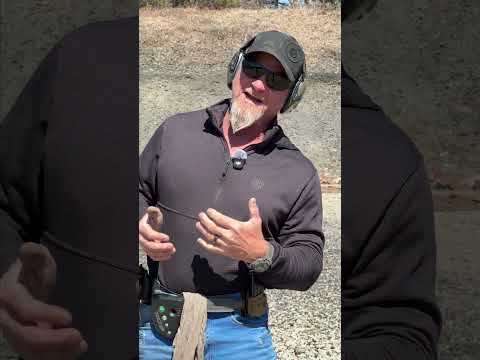
Natural Point of Aim with Your Rifle with 3-Gun National Champion Joe Farewell

Published on November 3, 2020
Duration: 3:55

This guide, presented by 3-Gun National Champion Joe Farewell, details how to develop a consistent Natural Point of Aim (NPA) for rifles equipped with red dot sights or LPVOs. The core technique involves closing your eyes, bringing the rifle to a stable position, and then opening your eyes to find the aiming point perfectly centered. Practicing this across various positions and optic magnifications is crucial for faster target acquisition and improved accuracy in both competition and tactical scenarios. Maintaining a consistent cheek weld and proper eye relief are key.


Quick Summary

Develop Natural Point of Aim (NPA) by closing your eyes, bringing your rifle to a comfortable position, and opening your eyes to find the optic's aiming point centered. Repeat this process in various positions and with different optics to ensure immediate sight acquisition and faster, more accurate shooting.

Chapters

  1. 00:00Introduction to Natural Point of Aim
  2. 00:08NPA with Red Dot and LPVO
  3. 00:22Developing NPA with Red Dots
  4. 00:36Consistent Cheek Weld for NPA
  5. 01:13How to Build Natural Point of Aim
  6. 01:44Practicing NPA in Multiple Positions
  7. 01:51Setup Tweaks Affecting NPA
  8. 02:12NPA with Low Power Variable Optics (LPVO)
  9. 02:32LPVO Magnification Transitions
  10. 02:54Testing NPA in Different Positions
  11. 03:04Troubleshooting NPA Issues
  12. 03:28Staying Relaxed for Clear View
  13. 03:38Conclusion and Quick Tips

Frequently Asked Questions

What is Natural Point of Aim (NPA) for a rifle?

Natural Point of Aim (NPA) is the position your rifle naturally settles into when brought to your shoulder without conscious adjustment. Developing NPA means your optic's aiming point is centered immediately upon raising the rifle, allowing for faster target engagement.

How do you develop Natural Point of Aim with a rifle?

To develop NPA, close your eyes, bring the rifle to a comfortable shooting position, and then open your eyes. If the aiming point is centered, your NPA is good. If not, adjust your stance or cheek weld until it is, then repeat to confirm consistency.

Does optic type affect Natural Point of Aim?

Yes, while the core technique remains the same, different optics like red dots and LPVOs can have slightly different NPA characteristics. For LPVOs, it's crucial to ensure NPA is consistent across all magnification settings.

Why is Natural Point of Aim important for shooters?

NPA is vital for speed and accuracy. It eliminates the need to search for the aiming point, allowing you to shoot sooner. This is critical in competition and essential for immediate threat engagement in tactical situations.

Related News

All News →

More Training & Techniques Videos You Might Like

More from Tactical Hyve

View all →