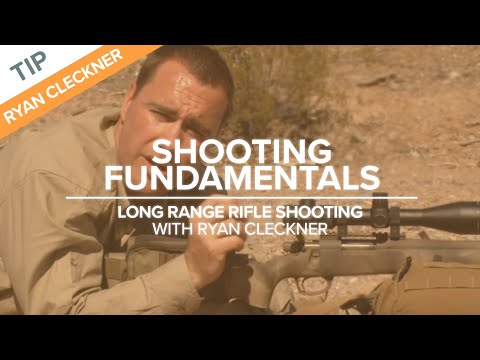
Running the Bolt with Authority | Long-Range Rifle Shooting with Ryan Cleckner

Instruction from Ryan Cleckner, former Special Operations Sniper and author of the 'Long-Range Shooting Handbook,' details the critical technique of running a bolt-action rifle bolt with authority. This method, involving a firm and complete four-part motion (lift, rear, forward, down), is essential for preventing malfunctions, ensuring reliable chambering of the next round, and enabling rapid, accurate follow-up shots in long-range scenarios. The video demonstrates this technique during live fire, emphasizing its importance for consistent performance.

Quick Summary

Running a bolt-action rifle bolt with authority involves a firm, four-part motion: lift fully up, pull fully to the rear, push fully forward, and pull fully down. This technique, demonstrated by former Special Operations Sniper Ryan Cleckner, is essential for preventing malfunctions and ensuring reliable chambering for accurate follow-up shots.

Chapters

  1. 00:15Introduction: Importance of Authoritative Bolt Cycling
  2. 00:34Proper Bolt Manipulation Technique: Step-by-Step
  3. 01:20Live Fire Demonstration of Bolt Cycling
  4. 01:46Summary: Benefits of Authoritative Bolt Action

Frequently Asked Questions

What is the correct technique for running a bolt-action rifle bolt?

The authoritative technique involves a firm, four-part motion: lift the bolt fully up, pull it fully to the rear, push it fully forward, and pull it fully down to lock. This ensures reliable chambering and prevents malfunctions.

Why is it important to run a bolt-action rifle bolt with authority?

Running the bolt with authority is crucial to prevent malfunctions like short-stroking, ensure the next round chambers reliably, and avoid missing critical follow-up shots in long-range shooting scenarios.

What are the risks of slow or hesitant bolt manipulation?

Slow or hesitant bolt manipulation can lead to errors such as forgetting to chamber a round, resulting in a misfire when you expect to fire. Consistent, rapid movement is key to reliability.

More Training & Techniques Videos You Might Like

More from NSSF—The Firearm Industry Trade Association

View all →