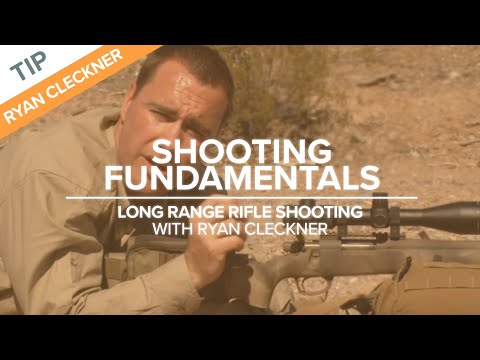
Shooting Positions in the Field | Long-Range Rifle Shooting with Ryan Cleckner

Mastering field shooting requires adapting to unstable environments beyond the bench. Ryan Cleckner emphasizes using the rifle sling effectively, particularly the 'Hasty Sling' technique, for stability in kneeling and seated positions. He also advises on utilizing natural rests like trees for standing shots, stressing to rest the stock, not the barrel, and offers a bipod trick for enhanced stability.

Quick Summary

Master field shooting by using the 'Hasty Sling' for stability in kneeling and seated positions. For standing shots, rest the rifle stock, not the barrel, against natural supports like trees. Practice these techniques to improve accuracy in unstable environments.

Chapters

  1. 00:12Intro to Field Shooting
  2. 00:56The Sling as a Stability Tool
  3. 01:33Sling Types for Field Use
  4. 02:15The Hasty Sling Technique
  5. 03:13Seated Shooting Positions
  6. 04:14Standing & Natural Rests
  7. 05:18Bipod Legs as Vertical Rests
  8. 06:22Conclusion & Practice

Frequently Asked Questions

What is the 'Hasty Sling' technique in rifle shooting?

The 'Hasty Sling' technique involves twisting the rifle sling before wrapping your support arm through it. This twist allows the strap to lay flat against your hand, creating rearward tension for increased stability without pinching.

How should you use natural rests like trees for standing rifle shots?

When using a tree for support, always rest the rifle's stock against the tree, never the barrel. Resting the barrel can cause shifts in your point of impact due to pressure and movement.

What are the most stable seated shooting positions for field use?

Ryan Cleckner prefers the cross-ankle seated position over the cross-legged version. This allows the shooter's support elbow to hook in front of the knee, providing better stability and reducing rifle cant.

Why is practicing field shooting positions important?

Field shooting positions are often less stable than bench shooting. Practicing them at the range is crucial for developing real-world proficiency and accuracy when hunting or in tactical scenarios.

More Training & Techniques Videos You Might Like

More from NSSF—The Firearm Industry Trade Association

View all →