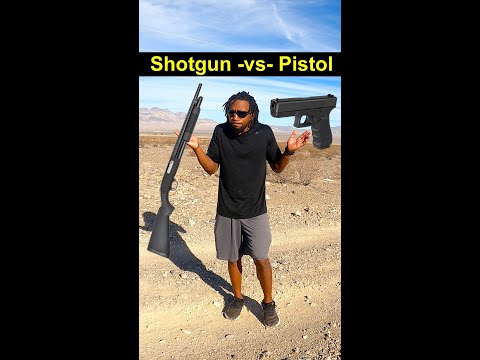
What Gun Should a Beginner Buy for Self Defense? (Real Test With Beginner)

Published on April 16, 2026
Duration: 56:08

This video emphasizes the critical importance of consistent trigger control for accurate shooting, especially for beginners. It introduces dry-fire exercises as a fundamental technique to develop proper trigger pull, sight alignment, and recoil management without live ammunition. The instructor demonstrates how to identify and correct trigger anticipation by focusing on the 'wall' of the trigger pull and maintaining sight picture through the break.


Quick Summary

For a first self-defense gun, prioritize reliability and ease of use, especially if training will be infrequent. A 4-inch revolver is recommended for home/vehicle defense due to its simplicity, while shotguns offer superior stopping power for home defense. Compact semi-automatics or revolvers are best for concealed carry, with comfort being a key factor.

Chapters

  1. 00:00Introduction: Choosing Your First Self-Defense Gun
  2. 01:43Key Consideration 1: Honesty About Training Frequency
  3. 04:25Key Consideration 2: Don't Buy Based on Looks
  4. 06:23Key Consideration 3: Budget and Reliability
  5. 09:04Key Consideration 4: Purpose of the Firearm
  6. 10:01Recommendation: 4-Inch Revolver for Home/Vehicle Defense
  7. 11:26Revolver vs. Semi-Auto: Simplicity and Malfunctions
  8. 12:29Trigger Control Drill: Dry Fire Practice
  9. 16:00Semi-Auto Malfunction Test with Dummy Rounds
  10. 17:28Revolver Test: Trigger Feel and Loading
  11. 19:12Revolver Magazine Loading vs. Semi-Auto
  12. 20:49Revolver Malfunction Test (Spent Casing)
  13. 21:26Revolver vs. Glock 19: Accuracy and Feel
  14. 23:25Why Revolvers Are Recommended for Beginners
  15. 25:57Recommendation: Shotgun for Home Defense
  16. 26:27Pump-Action vs. Semi-Auto Shotguns: Price and Reliability
  17. 27:19Shotgun Recoil and Stopping Power Explained
  18. 30:14Beretta 1301: Testing the Semi-Auto Shotgun
  19. 37:55Maverick 88: Testing the Pump-Action Shotgun
  20. 41:51Shotgun Recommendations: Maverick 88 vs. Beretta
  21. 43:16Shotgun vs. Handgun for Home Defense: Accuracy Debate
  22. 46:31Concealed Carry Recommendations: Compact Pistols
  23. 47:44Sig P365 vs. S&W Bodyguard 2.0 for CCW
  24. 54:58Revolvers for Concealed Carry: Simplicity and Reliability
  25. 55:30Other CCW Options: Hellcat, Shield, Glock 43
  26. 55:55Online Course Announcement

Frequently Asked Questions

What is the most important factor when choosing a first self-defense gun?

The most crucial factor is honesty about how often you will train with the firearm. Many owners buy guns for self-defense but rarely practice, making reliability and ease of use paramount for those who won't train consistently.

What type of firearm is recommended for home and vehicle defense for beginners?

A 4-inch barrel revolver, such as the Smith & Wesson 686, is recommended for its reliability, simplicity, and ease of operation. It's less confusing than semi-automatics and reduces the likelihood of common malfunctions.

Why are shotguns considered superior for home defense compared to handguns?

Shotguns offer significantly more stopping power and accuracy in close quarters due to their shoulder-fired nature and larger projectile. This provides a substantial advantage, making them a more effective tool for protecting your home and family.

What are the best options for concealed carry for beginners?

For concealed carry, compact semi-automatic pistols like the Sig P365 or Smith & Wesson Bodyguard 2.0 are popular for their size and comfort. However, revolvers like the Ruger LCR are also excellent choices for those prioritizing simplicity and ease of loading.

More Training & Techniques Videos You Might Like

More from CajunBoyJake

View all →