This video provides an expert-level overview of the 5.56mm cartridge's capabilities from close to long range, drawing on historical development and practical experience. It emphasizes understanding ballistics, selecting appropriate ammunition based on intended use, and the importance of data-driven decisions over anecdotal information. The instructor highlights how different bullet weights and barrel lengths affect performance and discusses the versatility of the 5.56mm for various shooting applications.
This guide details a close-range coyote hunting technique demonstrated by James O'Neill of ONEILLOPS. It emphasizes precise marksmanship for an ethical headshot after using a vocalization to stop the target at approximately 10 yards. The technique highlights effective predator calling and stealth positioning for successful hunts.
This guide details the process of mounting and zeroing a red dot optic on a civilian AR-15, as demonstrated by Elliott Delp. It emphasizes the effectiveness of red dots for close-range engagements (0-200 yards) and their value as a cost-effective optic choice for defensive carbines. The video showcases practical application and discusses realistic use cases for law-abiding citizens.
Ken Hackathorn, a firearms expert with decades of experience, argues that red dot sights offer minimal advantage for average shooters in typical self-defense encounters (0-10 yards). He emphasizes that achieving true proficiency with a red dot requires significant training commitment, suggesting that iron sights may be a more practical choice for many concealed carriers who cannot dedicate extensive practice time.
This guide, presented by Caleb from Brownells, details the installation and setup of offset sights on an AR-15 platform. It covers both manual flip-up iron sights and red dot optics like the Leupold DeltaPoint, emphasizing proper mounting techniques for optimal performance and usability. The expert instruction highlights maximizing sight radius for iron sights and strategic placement for red dots to ensure quick target acquisition.
This video demonstrates the 1-2-3-4 shooting drill, focusing on rapid target engagement and transitions. The shooter, exhibiting practitioner/expert authority, showcases effective recoil management and fluid weapon handling with an AR-15 platform rifle equipped with a red dot sight and weapon light. The drill emphasizes speed and accuracy in transitioning between multiple targets at close range.
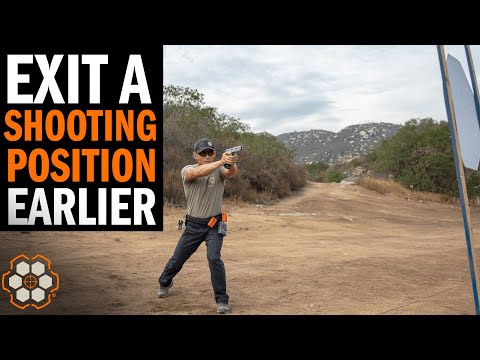
This guide details a technique for intermediate shooters to improve efficiency when exiting shooting positions. By integrating movement with the engagement of easy, close-range targets, shooters can save valuable time. The core principle is to begin moving as you fire the final shots on a target that doesn't require a static, precise stance, while maintaining proper body orientation.
This video showcases a Low-Light Rifle & Pistol Course focused on real-world application shooting. It covers dynamic close- to mid-range engagements conducted in both day and night conditions, emphasizing shooter accountability for every round fired. The course appears to be designed for practical self-defense and tactical proficiency, highlighting the importance of training under challenging, low-visibility circumstances. The video also credits its producer and links to the training organization's website.
This training focuses on the critical concept of mechanical offset, particularly for AR-15/M4 platforms. Larry Vickers, a highly authoritative instructor, explains how the design of the AR-15 necessitates a higher optic placement, leading to a difference between the point of aim and the bullet's impact at close range. Understanding and compensating for this 2.5-3 inch offset is crucial for accurate shooting, especially in personal defense scenarios.
This guide explains the proper use of AR-15 rear sight apertures. It highlights that the large aperture, often perceived for close-range, introduces parallax errors and is unsuitable for precise shooting. For any shot requiring accuracy, even at 25 yards, the small aperture must be used to maintain a consistent sight picture and avoid aiming errors.
This guide emphasizes training almost exclusively in double-action mode for defensive revolvers, as this is the most likely firing mode during a high-stress encounter. It details proper trigger control, grip maintenance, and the importance of practicing smooth, continuous trigger pulls to the reset point. The advice is geared towards ensuring combat-effective hits at close range, even under duress.
You've reached the end! 11 videos loaded.
Gun Laws by State
Read firearms regulations for all 50 states + D.C.
Find Gun Dealers
Search licensed FFL dealers near you.