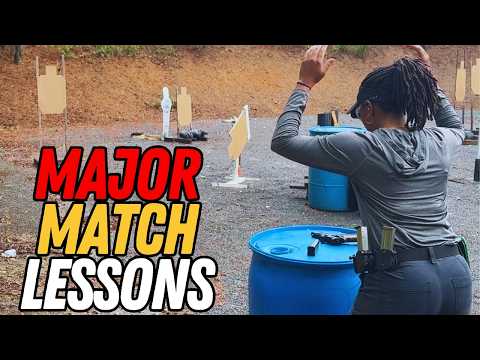
This video documents the 2026 Arkansas State IDPA Championship, highlighting the shooter's experiences, mistakes, and lessons learned throughout the match. The shooter, using a MAC 9 DS, discusses challenges with grip, safety engagement, round count, and the impact of weather conditions like rain. Key takeaways include the importance of pre-stage planning, consistent grip, proper safety management, and adapting to environmental factors in competitive shooting.
Joel Park, an expert firearms instructor, addresses common 'mystery misses' on close targets, often caused by over-focusing on difficult shots and neglecting fundamentals for easier ones. He emphasizes treating all targets with equal discipline and planning, regardless of distance. The discussion also touches on individual training needs and ammo consumption.
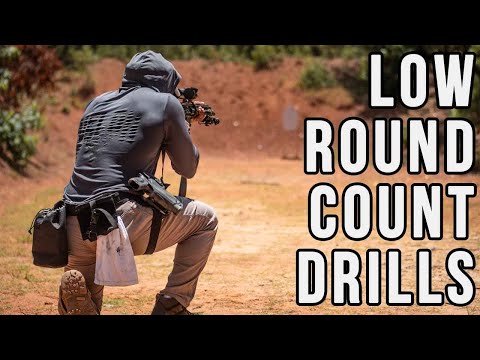
This video provides a comprehensive training regimen designed for effective firearm practice using 100 rounds or less. Instructor Rick from Achilles Heel Tactical demonstrates several drills focusing on trigger control, grip consistency, shot calling, and movement. The techniques emphasize building self-awareness and understanding cause-and-effect relationships behind the gun, suitable for shooters looking to develop fundamental skills.
This video from Farewell Firearms Training, featuring the #dryfirecrew, explains the critical concept of optic-to-bore offset on an AR-style rifle, which is approximately three inches. Expert instructor emphasizes that accurate shot calling relies on observing where the aiming point lifts during recoil, as this point directly correlates to the round's impact, which will be about three inches below that lift point at close range. This understanding is crucial for improving accuracy and diagnosing shot placement.
This guide, based on expert instruction from Ben Stoeger, focuses on advanced rifle shooting techniques. It details how to improve recoil control and shot consistency by emphasizing proper body structure, forward weight, and avoiding common compensations like pushing with the shoulder. The instruction highlights the importance of understanding visual perception versus actual gun movement and the 'dot press' for effective shot calling and error correction.
Alyssa Seymour, an intermediate USPSA competitor and certified instructor, shares 10 key lessons learned in her first year of competition. Her advice focuses on mastering stage strategy, efficient reloading, and utilizing practice tools like dry fire and VR systems. Seymour emphasizes that skill and smart planning are more critical than expensive gear for success in USPSA.
This video emphasizes process-oriented training over result-based training for firearms proficiency. It introduces a series of drills, starting with 'Trigger Control at Speed,' to build a durable grip and develop trigger manipulation skills. The progression includes 'One Shot Return,' '50/50s,' and 'Doubles,' progressively increasing distance and complexity to refine visual anchoring, grip consistency, and predictive shooting capabilities. The instructor stresses the importance of analyzing feedback to understand cause and effect, rather than focusing solely on the target outcome.
This video details the journey of a competitive shooter aiming for Master Class in IDPA. It showcases participation in multiple matches, highlighting stage strategies, common challenges like swinger targets and strong/weak hand shooting, and the importance of accuracy and efficient execution. The shooter discusses their progression, the need for consistent practice, and the differences between IDPA and USPSA.
This video explains the concept of 'shot calling' in firearms training, emphasizing that it's not about seeing bullet impacts but about interpreting visual and kinesthetic feedback during and immediately after firing. Instructor Joel Park advises focusing on sight movement and physical sensations in the hands to understand shot execution, enabling shooters to identify issues without needing to see the target. The goal is to develop an intuitive understanding of shot placement through consistent practice and attention to these indicators.
This guide, informed by a master-rated competitive shooter with 8 years of exclusive red dot experience, covers essential considerations for selecting pistol red dot sights. It details trade-offs in window size, durability, battery options, deck height, reticle size, and bezel design. The guide also touches on optic footprints, off-body carry solutions, and training techniques like optic occlusion.
This video compares the performance of red dot sights versus iron sights on a Springfield Armory Operator AOS 1911. It demonstrates how red dots can significantly improve accuracy and hit factor, especially for less experienced shooters, by simplifying sight alignment and enhancing target acquisition. The analysis includes data from shooters of different skill levels and discusses the tactical advantages and potential drawbacks of red dot optics.
This video provides a structured approach to effective live-fire training with limited ammunition, focusing on pistol and rifle fundamentals. The instructor emphasizes planning, utilizing drills like 'doubles' and transitions to hone marksmanship, visual focus, and recoil control. By analyzing shot groups and self-recording, shooters can identify and correct deficiencies, making the most of every round. The content is geared towards intermediate shooters looking to optimize their practice sessions.
Gun Laws by State
Read firearms regulations for all 50 states + D.C.
Find Gun Dealers
Search licensed FFL dealers near you.