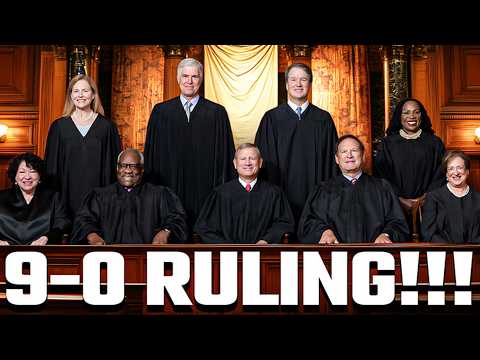
All Americans Affected: Supreme Court Issues 9-0 Unanimous Decision With Major Nationwide Impact!

Published on June 29, 2026
Duration: 9:25

This video details the legal battle of the Martin family against the FBI following a wrongful raid. It highlights a 9-0 Supreme Court ruling that limited government immunity under the discretionary function exception, emphasizing that law enforcement judgment doesn't automatically grant immunity. The case is now before the 11th Circuit, with the family citing a new 5th Circuit ruling (Morris v. United States) that distinguishes between policy decisions and their negligent execution. The government argues the cases are fundamentally different, seeking to maintain broad immunity.


Quick Summary

The Supreme Court ruled 9-0 that law enforcement doesn't automatically get immunity for exercising judgment. The government must prove decisions were based on policy, not just mistakes, impacting the discretionary function exception. This ruling is central to the Martin family's case against the FBI after a wrongful raid.

Chapters

  1. 00:00Introduction: Wrongful FBI Raid Scenario
  2. 01:24The Martin Family's Lawsuit and FTCA Claim
  3. 03:30Supreme Court's 9-0 Unanimous Ruling
  4. 04:07Remand to the 11th Circuit and New Arguments
  5. 05:17Morris v. United States: A New Precedent?
  6. 06:30Government's Defense and DOJ's Stance
  7. 08:00Future Implications and Potential Supreme Court Review

Frequently Asked Questions

What was the Supreme Court's unanimous decision regarding the FBI's wrong house raid?

The Supreme Court issued a 9-0 unanimous ruling stating that law enforcement does not automatically gain immunity just because judgment was exercised. The government must prove decisions were based on actual policy considerations, not simply mistakes, in cases involving the discretionary function exception.

How does the discretionary function exception apply to law enforcement actions?

The discretionary function exception can shield the government from liability under the Federal Tort Claims Act (FTCA) if the actions involved were discretionary policy decisions. However, the Supreme Court has clarified that this immunity is not automatic and requires a showing of policy grounding, not just errors in execution.

What is the significance of the Morris v. United States case for the Martin family?

The Martin family is using the 5th Circuit's ruling in Morris v. United States to argue that there's a crucial difference between making a discretionary policy decision and negligently executing it. They contend that botched execution is not automatically protected by immunity.

What is the government's main argument against holding the FBI accountable for the wrong raid?

The government argues that the FBI's actions in the Martin case were intertwined with law enforcement planning and operational judgments, making them part of a protected discretionary operation. They fear that isolating individual mistakes would weaken the discretionary function exception.

Related News

All News →

More 2nd Amendment & Law Videos You Might Like

More from Armed Scholar

View all →