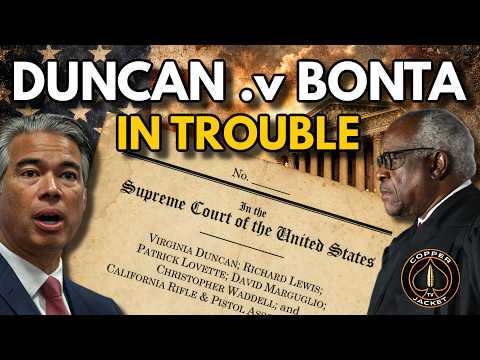
BREAKING NEWS!!! Ground Breaking Decision Just Changed 2A Landscape Forever!

Published on June 7, 2023
Duration: 9:24

This video provides an expert analysis of the Third Circuit's en banc ruling in Range v. Garland, which significantly impacts the Second Amendment landscape. The decision clarifies that the 'law-abiding citizen' test is rejected and that individuals with non-violent misdemeanor convictions, like Bryan Range's food stamp fraud case, remain protected by the Second Amendment. The ruling emphasizes the government's burden to prove historical tradition for firearm restrictions, a burden it failed to meet in this case.

Quick Summary

The Third Circuit's en banc ruling in Range v. Garland declared federal law 18 USC 922(g)(1) unconstitutional as applied to individuals with non-violent misdemeanor convictions. The court rejected the 'law-abiding citizen' test, affirming that such individuals remain protected by the Second Amendment, consistent with the Bruen decision's focus on historical tradition.

Chapters

  1. 00:00Third Circuit Ruling on Firearm Possession
  2. 00:24Channel Announcement: New Merch
  3. 01:07Discussion on Third Circuit Win
  4. 01:27Decision for Mr. Range
  5. 02:11Misdemeanor Conviction and Firearm Possession
  6. 02:29Lawsuit and Two-Step Approach
  7. 03:02Text, History, and Tradition
  8. 03:40On Banc Panel Ruling
  9. 04:22Constitutionality and Historical Precedent
  10. 05:00Clarifying the Central Issue
  11. 05:23Bruen Analysis and Court's Decision
  12. 05:59No Historical Support for Restriction
  13. 07:28Limited Scope and Potential Challenges

Frequently Asked Questions

What was the outcome of the Range v. Garland case in the Third Circuit?

The Third Circuit en banc panel ruled that federal law 18 USC 922(g)(1), prohibiting individuals with non-violent misdemeanor convictions from possessing firearms, is unconstitutional as applied to Bryan Range. This decision rejects the 'law-abiding citizen' test and emphasizes historical tradition.

How does the Range v. Garland decision affect the Second Amendment?

The Range v. Garland decision significantly impacts the Second Amendment by clarifying that individuals with non-violent misdemeanor convictions are still considered part of 'the people' protected by the amendment. It reinforces the Bruen standard, requiring the government to demonstrate historical tradition for firearm restrictions.

What legal precedent did the Third Circuit reject in Range v. Garland?

In Range v. Garland, the Third Circuit rejected the 'two-step approach' to Second Amendment analysis, which had been previously used by lower courts. This aligns with the Supreme Court's ruling in NYSRPA v. Bruen, which mandates a focus on text, history, and tradition.

Who is Bryan Range and why was he prohibited from owning firearms?

Bryan Range was prohibited from owning firearms due to a 1995 misdemeanor conviction in Pennsylvania for making a false statement on his food stamp application. The Third Circuit found this conviction did not justify his permanent disarmament under the Second Amendment.

Related News

All News →

More 2nd Amendment & Law Videos You Might Like

More from Armed Scholar

View all →