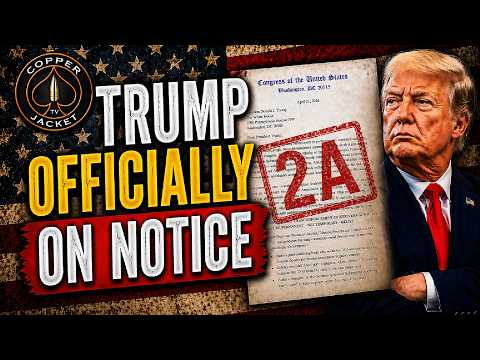
DOJ Turns on Democrat State — Says Gun Ban Violates the 2nd Amendment

Published on February 2, 2026
Duration: 8:43

The DOJ has filed an amicus brief challenging Massachusetts' handgun ban, arguing it violates the Second Amendment by restricting firearms in common use. The case, Granata v. Campbell, focuses on the state's 'approved firearms roster' which prevents sales of handguns not on the list, even if legal elsewhere. This intervention by the DOJ signals a federal stance against state-level bans on commonly owned firearms, citing Supreme Court precedents like Heller and Bruen.

Quick Summary

The DOJ argues Massachusetts' handgun ban, enforced via an 'approved firearms roster,' violates the Second Amendment by restricting firearms in common use. Citing precedents like Heller and Bruen, the DOJ contends that popular models like Glocks cannot be banned, asserting constitutional rights must be exercisable within the state.

Chapters

  1. 00:00DOJ Amicus Brief in Massachusetts
  2. 01:19Granata v. Campbell Case Details
  3. 02:55Constitutional Arguments & Common Use
  4. 05:49Glock Handguns & Market Impact

Frequently Asked Questions

What is the DOJ's stance on Massachusetts' handgun ban?

The U.S. Department of Justice filed an amicus brief arguing that Massachusetts' 'approved firearms roster' violates the Second Amendment by banning handguns commonly owned by Americans nationwide. This challenges the state's ability to restrict firearms in common use.

What is the Granata v. Campbell case about?

Granata v. Campbell is a federal case before the First Circuit Court of Appeals challenging Massachusetts' handgun roster system. Plaintiffs, including the Firearms Policy Coalition, argue the system unconstitutionally restricts sales of handguns not pre-approved by the state.

How does the DOJ's brief apply the 'common use' principle?

The DOJ's brief emphasizes that governments cannot ban firearms in common use, citing Supreme Court rulings like Heller and Bruen. It argues that restricting popular models like Glocks, which are widely owned, infringes on Second Amendment rights.

What is the significance of the DOJ's involvement?

The DOJ's intervention is significant because it represents the federal government's official position against state-level bans on commonly owned firearms. A favorable ruling could impact similar roster laws in other states.

Related News

All News →

More 2nd Amendment & Law Videos You Might Like

More from Guns & Gadgets 2nd Amendment News

View all →