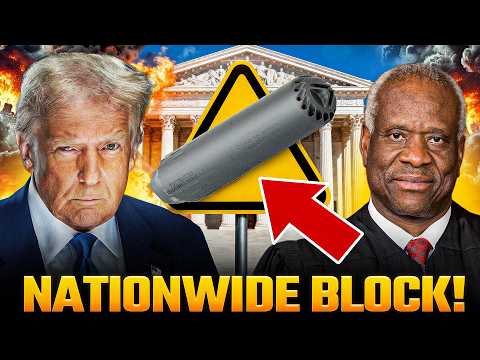
How the Supreme Court Just Boxed in the EPA, and What That Means for the ATF

Published on July 5, 2022
Duration: 10:54

William Kirk, President of Washington Gun Law, explains how the Supreme Court's 'West Virginia v. EPA' ruling impacts the ATF. The decision reinforces the separation of powers doctrine, limiting executive agencies' ability to create significant regulations without explicit Congressional delegation. This 'Major Questions Doctrine' could challenge the ATF's recent actions expanding federal control over firearms.

Quick Summary

The Supreme Court's 'West Virginia v. EPA' ruling established the 'Major Questions Doctrine,' limiting executive agencies' power to create significant regulations without explicit Congressional delegation. This principle could challenge the ATF's recent actions that expand federal control over firearms, reinforcing that major policy decisions must originate from Congress.

Chapters

  1. 00:00Introduction & Past Gun Law Rulings
  2. 00:43West Virginia v. EPA Case Introduction
  3. 01:20The Lengthy EPA Opinion Document
  4. 01:49Sponsor: Legal Heat Training
  5. 02:30Summarizing Complex Legal Issues
  6. 03:08The Separation of Powers Doctrine
  7. 04:09EPA's Regulatory Overreach Example
  8. 05:00West Virginia's Challenge and Supreme Court Question
  9. 05:51Supreme Court Strikes Down EPA Regulations
  10. 06:33Justice Roberts' Reasoning and Major Questions Doctrine
  11. 07:40Understanding the Major Questions Doctrine
  12. 08:31ATF's Actions Under Scrutiny
  13. 09:17Implications for ATF's Regulatory Overreach
  14. 10:16Conclusion & Call to Action

Frequently Asked Questions

What is the 'Major Questions Doctrine' and how does it affect the ATF?

The 'Major Questions Doctrine' dictates that federal agencies need explicit Congressional delegation to enact regulations with significant political and economic impact. This doctrine could challenge the ATF's recent actions if they are deemed to exceed their delegated authority without clear legislative backing.

How did the Supreme Court's 'West Virginia v. EPA' ruling impact executive agencies?

The Supreme Court ruled that the EPA overstepped its authority by enacting broad regulations without specific Congressional authorization. This decision reinforces the separation of powers, limiting agencies' ability to create major policy shifts independently.

What are the implications of the 'West Virginia v. EPA' case for gun laws and the ATF?

The ruling emphasizes that significant regulatory actions must come from Congress. This principle can be applied to ATF regulations, suggesting that actions expanding federal control over firearms without clear legislative mandates may face legal challenges.

What is the separation of powers doctrine in the context of US government agencies?

The separation of powers divides government into three branches: Legislative (makes laws), Executive (enforces laws), and Judicial (interprets laws). This doctrine ensures that lawmaking power resides exclusively with the legislative branch, not executive agencies.

Related News

All News →

More 2nd Amendment & Law Videos You Might Like

More from Washington Gun Law

View all →