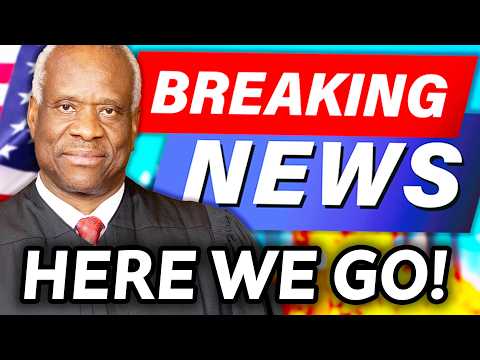
MAJOR BREAKING NEWS! MASSIVE 8-1 SUPREME COURT RULING HELPS KILL GUN BANS

Published on April 1, 2026
Duration: 12:49

This video analyzes the Supreme Court's ruling in Charles v. Salazar, arguing it significantly impacts future Second Amendment cases, particularly those involving AR-15 bans. Host Mark Smith, a constitutional attorney and Second Amendment advocate, explains how the Court's rejection of Colorado's attempt to redefine speech as conduct sets a precedent against states using arbitrary labels to ban firearms. The ruling suggests the Supreme Court will scrutinize the definitions of 'assault weapon' and 'large capacity magazine' used by anti-gun jurisdictions.

Quick Summary

The Supreme Court's ruling in Charles v. Salazar is a major win for Second Amendment rights, as it signals the Court's unwillingness to accept state-imposed labels like 'assault weapon.' The decision emphasizes that constitutional protections cannot be circumvented by redefining speech as conduct or by using political propaganda terms to classify firearms.

Frequently Asked Questions

What is the significance of the Supreme Court's ruling in Charles v. Salazar for gun rights?

The Supreme Court's decision in Charles v. Salazar is significant because it established that states cannot redefine constitutionally protected speech as 'conduct' to bypass First Amendment protections. This precedent is expected to be applied to Second Amendment cases, challenging how anti-gun jurisdictions label firearms like AR-15s as 'assault weapons'.

How does the Charles v. Salazar ruling affect AR-15 ban cases?

The ruling in Charles v. Salazar suggests the Supreme Court will not accept arbitrary labels like 'assault weapon' used by states to ban firearms. The Court's stance against redefining speech as conduct implies they will scrutinize the actual nature of AR-15s and similar semi-automatic rifles, rather than deferring to state-imposed political classifications.

What does the Supreme Court mean by the 'labeling game' in relation to gun laws?

The 'labeling game' refers to the practice by anti-gun jurisdictions of applying political propaganda terms, such as 'assault weapon' or 'large capacity magazine,' to firearms and accessories to justify bans. The Supreme Court indicated in Charles v. Salazar that they will not be bound by these labels and will look at the factual reality of the items in question.

Can states redefine constitutional rights through labeling, according to the Supreme Court?

No, the Supreme Court has indicated that constitutional rights, such as those protected by the First Amendment, cannot be renamed or have their protections nullified by mere labels. The ruling in Charles v. Salazar emphasizes that the Court will look beyond state-imposed definitions to the substance of the matter.

Related News

All News →

More 2nd Amendment & Law Videos You Might Like

More from The Four Boxes Diner

View all →