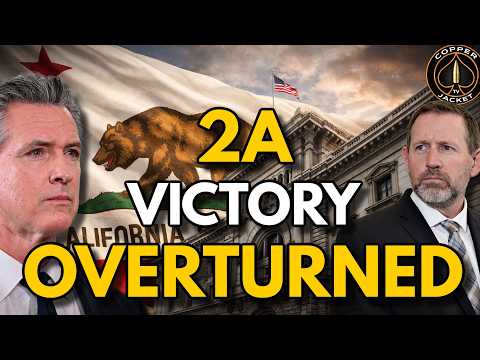
POWERFUL PRECEDENT SET: GOV'T CANNOT DEMAND SOCIAL MEDIA INFORMATION FROM CCW APPLICANTS

Published on October 25, 2024
Duration: 11:47

This video features Mark W. Smith, a constitutional attorney and Supreme Court Bar member, discussing a significant Second Circuit Court ruling. The ruling prevents government officials from demanding social media information from CCW applicants, citing Second Amendment protections. Smith elaborates on how this aligns with First Amendment rights to privacy and anonymous speech, drawing historical parallels to the Federalist Papers.

Quick Summary

A US Court of Appeals for the Second Circuit ruling prohibits government officials from demanding social media information from CCW applicants. This precedent protects Second Amendment rights by preventing the unconstitutional condition of waiving First Amendment privacy and anonymity to exercise the right to bear arms.

Chapters

  1. 00:00Second Circuit Court Ruling Overview
  2. 00:37Host Introduction & Credentials
  3. 00:52New York's Post-Bruen Reaction
  4. 01:47Bruen's Criteria for Permitting
  5. 02:44First & Second Amendment Comparisons
  6. 03:26New York's Moral Character Requirement
  7. 04:30Unconstitutional Conditions Doctrine
  8. 05:01Antonyuk Case Ruling Details
  9. 06:13First Amendment Right to Anonymity
  10. 07:20Historical Context of Anonymous Speech
  11. 08:49Second Circuit's Logic on Social Media

Frequently Asked Questions

Can the government demand social media information from CCW applicants?

No, a significant ruling by the US Court of Appeals for the Second Circuit states that licensing officials cannot demand social media information from CCW applicants. This decision upholds Second Amendment rights and protects First Amendment privacy and anonymity.

What is the legal basis for not requiring social media history for CCW permits?

The legal basis rests on the principle that the government cannot impose unconstitutional conditions. Requiring applicants to waive their First Amendment right to privacy or anonymity to exercise their Second Amendment right to bear arms is prohibited.

How does the Bruen decision relate to CCW social media requirements?

The NYSRPA v. Bruen decision established that firearm permitting criteria must be narrow, objective, and binary. New York's attempt to use social media history for 'good moral character' assessments was deemed overly discretionary and inconsistent with Bruen's mandate.

What historical precedent supports the right to anonymous speech?

The right to anonymous speech is historically supported by examples like The Federalist Papers, where James Madison, Alexander Hamilton, and John Jay wrote under the pseudonym 'Publius' to persuade the public without revealing their identities.

Related News

All News →

More 2nd Amendment & Law Videos You Might Like

More from The Four Boxes Diner

View all →