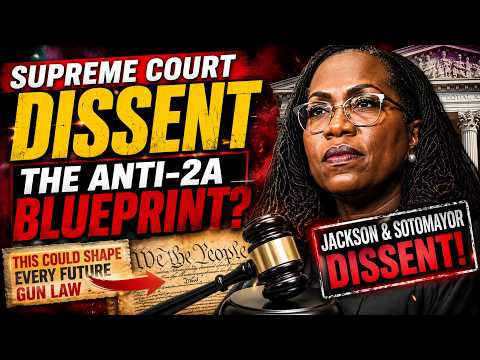
Supreme Court PP Slaps ATF in Landmark 2A Decision

Published on June 25, 2026
Duration: 15:28

This video analyzes the Supreme Court's landmark decision in United States v. Hamani, which significantly impacts firearm prohibitions related to drug use. The ruling clarifies that a broad statutory prohibition on firearm possession for individuals who use controlled substances, without individualized proof of danger, violates the Second Amendment. The decision also touches upon the Commerce Clause's limits on federal power, suggesting potential future challenges to other regulations. The analysis highlights the historical context of 'habitual drunkard' laws and contrasts them with modern interpretations.

Quick Summary

The Supreme Court's 9-0 decision in United States v. Hamani ruled that broad federal firearm prohibitions for unlawful users of controlled substances are unconstitutional without individualized proof of danger. This landmark ruling impacts ATF regulations and requires a re-evaluation of how drug use affects Second Amendment rights.

Chapters

  1. 00:00Introduction: Landmark Supreme Court Decision
  2. 01:05Case Synopsis: United States v. Hamani
  3. 02:15The ATF's Argument and the Fifth Circuit
  4. 02:25Supreme Court's 'Slap Down' on the Government
  5. 03:00Sponsor: Right to Bear Legal Protection
  6. 03:13The Court's Decision: Narrow Scope and Key Exclusions
  7. 05:11Government's 'Ambitious Theory' vs. Second Amendment
  8. 06:22Historical 'Habitual Drunkard' Laws and Analogy Failure
  9. 07:54Founding Fathers and Historical Drinking Culture
  10. 09:44Justice Thomas's Concurrence: Commerce Clause Concerns
  11. 11:47Implications for Convictions and Future Regulations
  12. 12:58Conclusion and Channel Outro

Frequently Asked Questions

What was the Supreme Court's ruling in United States v. Hamani regarding firearm prohibitions?

The Supreme Court ruled in United States v. Hamani that a broad federal law prohibiting firearm possession by unlawful users of controlled substances is unconstitutional as applied to individuals who do not pose a specific danger. The decision emphasizes the need for individualized assessment rather than automatic bans.

How does the US v. Hamani decision affect current firearm laws?

The US v. Hamani decision significantly impacts firearm laws by requiring individualized proof of danger for prohibiting individuals based on controlled substance use. It may lead to challenges of existing convictions and necessitates a review of ATF regulations and Form 4473.

Did the Supreme Court's ruling in US v. Hamani overturn all firearm prohibitions related to drug use?

No, the ruling in US v. Hamani did not overturn all firearm prohibitions related to drug use. It specifically addressed the broad, automatic prohibition under 18 U.S.C. § 922(g)(3) without individualized proof of danger. Prohibitions based on demonstrated danger or other specific legal grounds may still stand.

What is the significance of Justice Thomas's concurrence in the Hamani case?

Justice Thomas's concurrence in the Hamani case highlighted concerns that the law in question might exceed Congress's power to regulate interstate commerce. This suggests a potential future avenue for legal challenges to federal regulations based on Commerce Clause limitations.

Related News

All News →

More 2nd Amendment & Law Videos You Might Like

More from The VSO Gun Channel

View all →