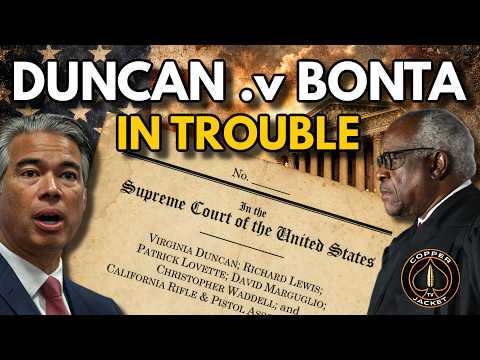
Supreme Court Stops California From Doxing Gun Owners!!! AFP v. Bonta

Published on July 6, 2021
Duration: 7:37

The Supreme Court, in a 6-3 decision in Americans for Prosperity Foundation v. Bonta, overturned a California law requiring charities to disclose the names and addresses of donors contributing $5,000 or more. The Court found the law was not narrowly tailored to the state's interest in investigating charitable misconduct and infringed upon First Amendment rights to association and privacy, potentially chilling donations and leading to retaliation.

Quick Summary

The Supreme Court, in a 6-3 decision in Americans for Prosperity Foundation v. Bonta, overturned a California law mandating charities disclose donors of $5,000+, citing infringement on First Amendment rights to association and privacy. The Court found the law was not narrowly tailored to the state's interest in investigating charitable misconduct.

Chapters

  1. 00:00Supreme Court Decision Overview
  2. 00:11Call to Action: Like & Subscribe
  3. 00:19Sponsor: USCCA
  4. 00:32The California Law Explained
  5. 00:49Case Details: AFP v. Bonta
  6. 00:54First and Second Amendment Implications
  7. 01:47California's Rationale for the Law
  8. 02:14Americans for Prosperity Foundation's Opposition
  9. 02:25Ninth Circuit Ruling
  10. 02:57Support from Pro-2A Organizations
  11. 03:09Supreme Court Decision Details
  12. 03:17Chief Justice Roberts' Opinion
  13. 03:52Level of Scrutiny Applied
  14. 04:14Exacting Scrutiny Explained
  15. 04:37Impact on Donor Chilling
  16. 04:59Majority Opinion Breakdown
  17. 05:24Significance of the Ruling
  18. 05:36Connection to NYSRPA v. Corlett
  19. 06:18Why This Case Matters
  20. 06:49Viewer Questions & Engagement
  21. 07:03Supporting the Channel Algorithm

Frequently Asked Questions

What was the Supreme Court's decision in Americans for Prosperity Foundation v. Bonta?

The Supreme Court ruled 6-3 to overturn a California law that required charities to disclose the names and addresses of donors contributing $5,000 or more annually. This decision protects donor privacy and freedom of association.

Why did California require charities to disclose donor information?

California's stated reason for the law was to gather information to aid in investigations of charitable misconduct. The state argued this was necessary to ensure accountability among non-profit organizations operating within its borders.

What constitutional rights were at stake in the AFP v. Bonta case?

The case primarily involved First Amendment rights, specifically the freedom of association and the right to privacy for donors. The Supreme Court found that the California law infringed upon these fundamental rights.

What is 'exacting scrutiny' as applied in the Supreme Court's ruling?

Exacting scrutiny is a legal standard requiring a substantial relationship between a disclosure requirement and a sufficiently important government interest. While not the highest level of scrutiny, it still demands that disclosure rules be narrowly tailored to achieve their objective.

Related News

All News →

More 2nd Amendment & Law Videos You Might Like

More from Armed Scholar

View all →