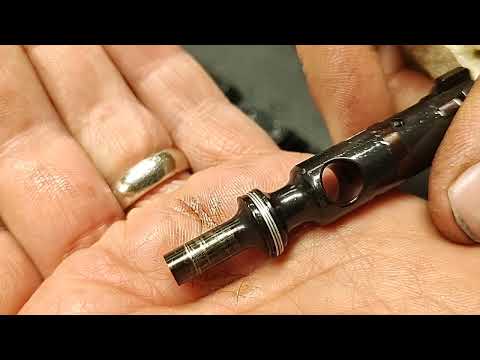
3 Expo Arms Chrome AR15 BCG Physicals

Published on February 27, 2023
Duration: 27:23

This video provides a detailed inspection of three Expo Arms chrome AR-15 bolt carrier groups (BCGs). The instructor performs a series of tests, including checking for proper staking, measuring dimensions like carrier length and bolt protrusion, and inspecting critical components like extractors and firing pin holes. Minor issues such as slightly undersized extractor pockets and a misaligned carrier key are identified, with recommendations for correction. The overall assessment highlights the quality of the BCGs, particularly their internal finish and staking.


Quick Summary

A quality AR-15 bolt carrier group (BCG) exhibits a smooth internal finish, properly staked carrier key screws, and precise dimensions for carrier length and bolt protrusion. Critical components like the firing pin tip and bolt face should be free of defects. Proper staking prevents screw loosening, and accurate dimensions ensure reliable function with other firearm parts, especially when using steel-cased ammunition where magnetism can be a concern.

Chapters

  1. 00:00Introduction: Expo Arms Chrome BCGs
  2. 00:25Initial Gathering Test
  3. 00:43Disassembly and Cleaning
  4. 01:32Borescope Inspection of Carrier Interior
  5. 03:04Carrier Key Staking and Torque Test
  6. 05:20Bolt Carrier 3-Bore and Gas Ring Inspection
  7. 07:24Carrier Length Measurement
  8. 08:52Gas Path and Interior Carrier Finish
  9. 09:30Bolt Inspection Begins
  10. 13:16Bolt Tail and No-Go Gauge Test
  11. 13:32Extractor and Spring Inspection
  12. 14:35Extractor Pocket Sizing
  13. 16:29Ejector Inspection
  14. 17:07Firing Pin Hole Test
  15. 17:59Bolt Protrusion Measurement
  16. 19:02Bolt Shoulder Measurement
  17. 20:19Firing Pin Tip Inspection
  18. 21:07Bolt Face Opening Check
  19. 21:25Cam Pin Wear and Magnetism Test
  20. 23:07Headspace Check
  21. 23:43Summary of Findings
  22. 24:27Carrier Key Alignment Check
  23. 26:38Carrier Key Stoning Importance
  24. 27:09Final Assessment and Recommendations

Frequently Asked Questions

What are the key indicators of a quality AR-15 bolt carrier group (BCG)?

A quality BCG should have a smooth internal finish, properly staked carrier key screws, correct dimensions for carrier length and bolt protrusion, and no defects on critical surfaces like the firing pin tip or bolt face. Proper staking prevents screws from loosening, while precise dimensions ensure reliable function with other firearm components.

What issues were found with the Expo Arms chrome BCGs in the video?

The inspection revealed slightly undersized extractor pockets, which can make installing new springs difficult and potentially reduce their lifespan. One carrier key was also found to be slightly misaligned. The extractor claws were noted as being less sharp, a common trait with chrome plating, which might affect extraction reliability under extreme conditions.

Why is measuring bolt carrier length important for AR-15s?

Carrier length is crucial because it influences the buffer's position. If a carrier is too short, the buffer can move too far back and potentially strike the buffer retainer pin, leading to malfunctions. Accurate carrier length ensures proper interaction between the buffer, carrier, and retainer.

What is the significance of checking for magnetism in an AR-15 BCG?

Checking for magnetism is important if you use steel-cased ammunition. Steel casings and projectiles are ferromagnetic, meaning they can attract and hold metallic debris. If a BCG is magnetized, this debris can stick to it, potentially causing reliability issues and increased wear.

More Gunsmithing & DIY Videos You Might Like

More from School of the American Rifle

View all →