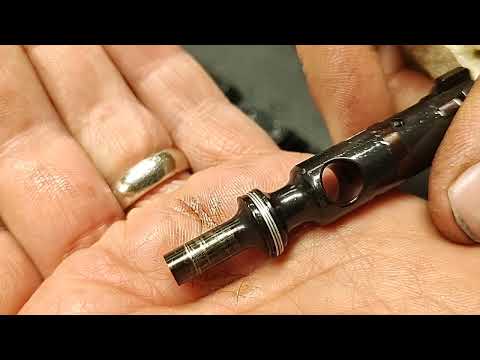
Centurion Arms BCG Physical

Published on March 16, 2020
Duration: 14:47

This video provides a detailed physical inspection and gauging of a Centurion Arms bolt carrier group (BCG). It covers checking for machining marks, staking quality, and uses pin gauges to measure critical dimensions like the carrier's 3-bore, bolt tail seal, and bolt shoulder support. The instructor also demonstrates how to perform a reverse torque test on the gas key and checks for proper firing pin protrusion and headspace. While some areas showed minor roughness, the overall assessment indicates a functional and well-manufactured BCG.


Quick Summary

This expert inspection of a Centurion Arms Bolt Carrier Group (BCG) details critical checks including visual assessment of machining, gas key staking, and precise gauging of internal dimensions using pin and go/no-go gauges. Key measurements for the carrier's 3-bore, bolt tail seal, and firing pin protrusion are provided, along with a headspace check.

Chapters

  1. 00:00Introduction
  2. 00:34Disassembly
  3. 01:24Initial Visual Inspection
  4. 02:09Bolt Carrier Gauging
  5. 03:58Carrier 3-Bore Measurement
  6. 05:08Borescope Inspection
  7. 06:48Further Carrier Gauging
  8. 07:28Bolt Tail Seal Check
  9. 08:28Cam Pin Inspection
  10. 09:04Magnetism Check
  11. 09:20Firing Pin Protrusion
  12. 09:57Ejector Inspection
  13. 10:40Gas Rings Check
  14. 10:57Carrier Length Measurement
  15. 11:47Carrier Key Alignment
  16. 12:28Extractor Inspection
  17. 13:11Firing Pin Hole Gauge
  18. 13:23Bolt Tail Gauge
  19. 13:33Headspace Check
  20. 14:04Conclusion

Frequently Asked Questions

What are the key components inspected on a Centurion Arms BCG?

The inspection covers the bolt carrier for machining marks and internal finish, the gas key for staking, the bolt for extractor function and fit, the cam pin, firing pin protrusion, ejector, and overall carrier length. Headspace is also checked.

What tools are used for gauging the Centurion Arms BCG?

The video utilizes pin gauges to measure internal dimensions like the carrier's 3-bore and bolt tail seal. Go/no-go gauges are used for the extractor, firing pin hole, and bolt tail. A torque wrench is used for the reverse torque test on the gas key.

Are there any potential issues noted on the Centurion Arms BCG?

The instructor observed a slightly rougher finish at the opening of the carrier's 3-bore. Additionally, some measurements fell into the 'yellow' range for the bolt shoulder support and gas ring run, indicating a tight fit that might impact performance in specific scenarios.

How is the firing pin protrusion checked on this BCG?

Firing pin protrusion is measured using a gauge, with the video showing a reading between .0281 and .029 inches. This measurement is critical for ensuring reliable ignition of the primer.

Related News

All News โ†’

More Gunsmithing & DIY Videos You Might Like

More from School of the American Rifle

View all โ†’