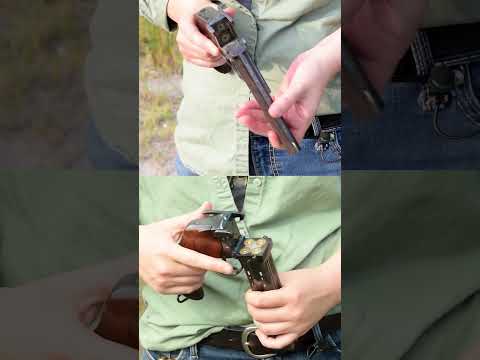
French St. Étienne 1907 Hydraulic Dashpot

Published on June 25, 2026
Duration: 2:07

This video provides an in-depth look at the unique hydraulic dashpot mechanism in the French St. Étienne 1907 rifle, a key component for controlling bolt recoil and rate of fire. It explains how the dashpot interacts with secondary sear mechanisms to hold the action open, detailing the internal workings and the impact of hydraulic pressure on its function. The demonstration highlights the historical significance of this innovative design.


Quick Summary

The French St. Étienne 1907 rifle utilizes a hydraulic dashpot to control bolt recoil and limit its rate of fire to approximately eight rounds per minute. This mechanism absorbs recoil energy, allowing a secondary sear to hold the action open. Loss of hydraulic pressure negates this function, leading to a faster, uncontrolled firing rate.

Chapters

  1. 00:00Introduction to the 1907 T
  2. 00:05South Carolina Military Museum Example
  3. 00:09The Hydraulic Dashpot Feature
  4. 00:13Control Lever and Pressure Adjustment
  5. 00:20Impact of No Hydraulic Pressure
  6. 00:25Slow Rate of Fire Explained
  7. 00:30Sear Mechanism Interaction
  8. 00:37Secondary Sear Demonstration
  9. 00:48Interior Sear and Firing Moment
  10. 00:56Cam Interaction with Dashpot
  11. 01:01Dashpot and Sliding Block Cam
  12. 01:08Setting Up the Mechanism
  13. 01:14Recoil and Dashpot Lift
  14. 01:21Action Held Open by Lever
  15. 01:27Dashpot Drop Without Pressure
  16. 01:34Sear Release and Rate of Fire
  17. 01:40Conclusion and Museum Support

Frequently Asked Questions

What is the primary function of the hydraulic dashpot in the French St. Étienne 1907 rifle?

The hydraulic dashpot in the French St. Étienne 1907 rifle is a key component designed to control bolt recoil and regulate the rate of fire. It absorbs energy from the recoiling bolt, allowing a secondary sear to hold the action open, thereby limiting the firing speed to approximately eight rounds per minute.

How does the hydraulic dashpot affect the rate of fire of the French St. Étienne 1907?

The hydraulic dashpot, when functional with sufficient pressure, slows down the bolt's return cycle. It allows a secondary sear to catch the bolt carrier, holding the action open and limiting the rate of fire to a very slow pace, around eight rounds per minute. Without pressure, this function is lost.

What happens if the hydraulic dashpot in the French St. Étienne 1907 loses its pressure?

If the hydraulic dashpot loses its pressure, as demonstrated in the video, it cannot effectively absorb recoil or hold the action open. The mechanism drops instantly, bypassing the intended sear engagement and allowing the bolt to cycle freely, resulting in a much faster, uncontrolled rate of fire compared to its design.

Where can one see examples of historical firearms like the French St. Étienne 1907?

Historical firearms like the French St. Étienne 1907 can often be found in specialized collections. The video specifically highlights the South Carolina Military Museum as a location where such rare firearms are preserved and made available for study and demonstration.

More Gunsmithing & DIY Videos You Might Like

More from C&Rsenal

View all →