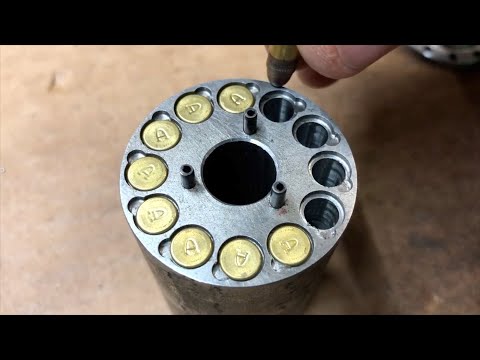
Home Shop Rifling THREE(ish)...China vs. Ukraine Rifling Buttons!

Published on February 27, 2019
Duration: 13:01

Mark Serbu demonstrates a home-shop button rifling process using Chinese and Ukrainian rifling buttons on 4140 and 12L14 steel barrel blanks. The video details the use of a hydraulic press and Moly grease, concluding with a comparison of the 4-groove rifling from the Chinese button and 6-groove from the Ukrainian button. Serbu provides expert insights into material selection and the practicalities of DIY barrel making.

Quick Summary

Mark Serbu compares Chinese and Ukrainian rifling buttons for home shop use. The Chinese button (Tungsten Carbide, TiN coated) creates 4 grooves, while the Ukrainian (combination sizing/rifling) creates 6 grooves. Both are tested on 4140 and 12L14 steel barrel blanks using a hydraulic press and Moly grease, with insights into material suitability and process risks.

Chapters

  1. 00:00Introduction & Materials
  2. 01:59Testing Ukrainian Button
  3. 07:48Testing Chinese Button
  4. 10:56Results & Comparison

Frequently Asked Questions

What materials are used for barrel blanks in this DIY rifling demonstration?

The demonstration uses barrel blanks made from 4140 Heat-Treated Steel and 12L14 Leaded Steel. While 12L14 is noted for its machinability, it's generally not recommended for high-quality barrels but serves well for testing rifling button resistance.

What is the difference between the Chinese and Ukrainian rifling buttons shown?

The Chinese button is made of Tungsten Carbide with a Titanium Nitride (TiN) coating and produced 4 grooves. The Ukrainian button has a combination sizing/rifling design and produced 6 grooves.

What tools and materials are needed for this home shop button rifling process?

Key tools include a hydraulic press and various spacers. Materials consist of steel barrel blanks, rifling buttons (Chinese or Ukrainian), and Molybdenum Disulfide (Moly) grease for lubrication.

What are the potential risks when performing button rifling at home?

A significant risk mentioned is using hardened materials like drill rods as spacers behind the rifling button, which could potentially damage the newly formed rifling if they come into contact.

More Gunsmithing & DIY Videos You Might Like

More from markserbu

View all →