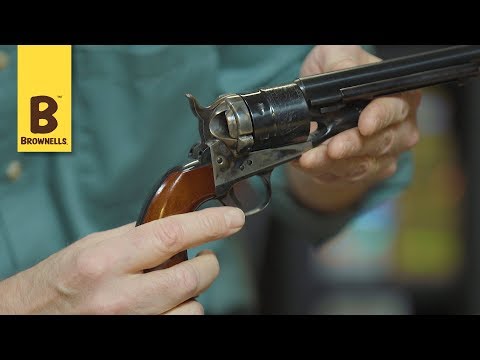
The Revolver they *should* have used in Zulu, with firearms and weapon expert Jonathan Ferguson

Published on January 18, 2023
Duration: 21:42

This guide details the complex process of converting a percussion Adams revolver to a cartridge-firing firearm, a common practice in the late 19th century. The conversion involves replacing key components like the cylinder and hammer, and significantly modifying the frame to accept cartridges and an ejector rod. The Royal Armouries' Jonathan Ferguson explains these intricate steps, highlighting the craftsmanship involved in transforming these historical pieces.

Quick Summary

Converting a percussion Adams revolver to cartridge involves replacing the cylinder and hammer, milling the frame for cartridge clearance, and adding a loading gate. The ejector rod often doubled as a safety by preventing cylinder rotation when stowed. These conversions, like the Mark I Adams, were complex gunsmithing tasks that often resulted in the loss of original markings due to extensive refinishing.

Chapters

  1. 00:02Introduction to the Adams Revolver
  2. 00:16Cartridge Revolver Features
  3. 01:04Trigger Mechanism: Double Action
  4. 01:35The Adams Revolver Series
  5. 02:22Early Adams Revolvers (1851)
  6. 03:49Beaumont Adams Conversions (1854)
  7. 05:00Converting to Cartridge Operation
  8. 06:05Required Modifications for Conversion
  9. 08:15Hammer and Cylinder Changes
  10. 09:18Safety Bolt on Percussion Models
  11. 10:44Ejector Rod as a Safety Feature
  12. 11:06Refinishing and Markings
  13. 12:20Percussion Loading Mechanism
  14. 13:03Cylinder Retention System Changes
  15. 14:34The First Converted Pistol (No. 1)
  16. 15:00Naval and Cavalry Use
  17. 16:13Historical Context: Zulu Movie
  18. 17:01Victorian vs. WWI Finish
  19. 18:03Officer Carry and Standardization
  20. 19:04Military Designations: Dean vs. Adams
  21. 19:29Mark II and Mark III Adams Revolvers
  22. 20:36Royal Armouries Event Announcement

Frequently Asked Questions

What are the key modifications needed to convert a percussion Adams revolver to a cartridge-firing firearm?

Converting a percussion Adams revolver to cartridge involves replacing the cylinder with a cartridge-compatible one, milling a U-shaped channel in the frame for cartridge insertion, adding a loading gate, and replacing the hammer with one designed for primer ignition. The original cylinder retention system is also removed and replaced with a more modern mechanism.

How did the ejector rod on converted Adams revolvers function as a safety device?

The ejector rod on converted Adams revolvers often served as a safety. When stowed in a specific position, it would engage a detent, preventing the cylinder from rotating and thus making the firearm unable to fire. This was a clever way to add a safety feature to a converted design.

What is the historical significance of the Mark I Adams revolver discussed in the video?

The Mark I Adams revolver, dated 1872, is significant as it was the first pistol sent back to Adams to be converted for cartridge use. It bears the serial number '1' and the word 'converted,' reflecting its pioneering role in this modification process.

Why were original markings often lost on converted Adams revolvers?

Conversions required extensive polishing and refinishing of the firearm to integrate new components and achieve a smooth, aesthetically pleasing finish. This process often obliterated original markings, including maker's marks, serial numbers, and government ownership stamps.

Related News

All News →

More Gunsmithing & DIY Videos You Might Like

More from Royal Armouries

View all →