USGI Armorer's Gauges & Tools

Published on August 10, 2020
Duration: 19:25

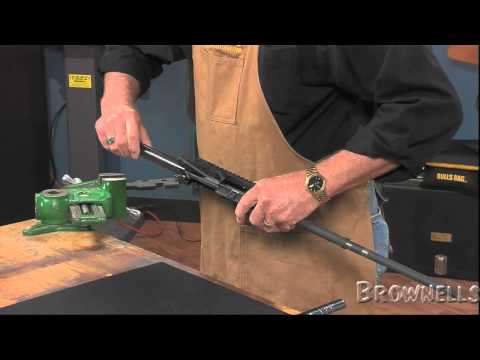
This video provides an in-depth look at US Government Issue (USGI) armorer's gauges and tools used for inspecting and maintaining AR-15/M16 pattern rifles. The presenter, an experienced instructor, details the function and rarity of various specialized tools, including taper plug gauges for bore dimensions, magazine well gauges for receiver integrity, and thread gauges for receiver extensions. The content highlights the importance of these gauges for ensuring firearms are within military specifications and for troubleshooting potential issues.


Quick Summary

USGI armorer's gauges are specialized tools for military armorers to inspect firearm components, ensuring they meet military specifications for reliability. Examples include taper plug gauges for checking 'egged out' pin bores, magazine well gauges for receiver integrity, and throat erosion gauges for barrel wear. These tools are vital for maintaining firearms to exact standards.

Chapters

  1. 00:00Introduction to USGI Gauges & Tools
  2. 00:10US Government Issued Gauges Explained
  3. 00:28Used vs. New vs. Reproduction Gauges
  4. 00:56Using Gauges to Perfect Commercial Tools
  5. 00:75Rare Taper Plug Gauges: Firing Pin & Lower Receiver
  6. 01:32Rare USGI Magazine Well Gauge
  7. 02:12Rare Thread Comparator Gauge & Set Gauge
  8. 03:07Rare Firing Pin Protrusion Gauge
  9. 03:38Key Machine Tool for Carrier Key Repair
  10. 04:36US Marine Corps Armor Gauge & Multipurpose Gauge
  11. 04:53Castle Nut Tool
  12. 04:67Fabricated Tools from USGI Manuals
  13. 04:92Modified Pliers for Pins and Springs
  14. 05:12Modified Allen Key for Detents
  15. 05:24Pivot Pin Installation Tool
  16. 05:33Broken Shell Extractor Tool
  17. 05:41Front Sight Post Depressor Tool
  18. 05:60Front Sight Tools (A1/A2)
  19. 05:76Colt Tool for Rear Sight
  20. 05:95Slave Pin for Trigger/Disconnect Installation
  21. 06:12Complete USGI Kits: Barrel Vises, Erosion Gauges
  22. 06:54Headspace and Muzzle Erosion Gauges
  23. 06:83Chamber Reflector Tool for Visual Inspection
  24. 07:04Barrel Straightness Gauge
  25. 07:10Firing Pin Protrusion Gauge (Go/No-Go)
  26. 07:19Older Style Multipurpose Wrench for Flash Hiders
  27. 07:38M231 Port Firing Weapon Tool
  28. 07:71Trigger Pull Gauge
  29. 08:05Modified Throat Erosion Gauge (Marine Corps)
  30. 08:33Rare Throat Erosion Gauge with Gradient Marks
  31. 08:64Rare XM16E1 Armor Kit
  32. 09:43Overhaul Gauges for Pins and Safety Hole
  33. 09:69Magazine Lip Gauge (Brownells Reproduction)
  34. 09:84US Marine Corps Front Lug Gauge
  35. 10:08Recent M16A4 Kit Acquisition
  36. 10:48Commercial Reproductions on the Table
  37. 11:13Summary of USGI Gauges and Tools

Frequently Asked Questions

What are USGI armorer's gauges used for?

USGI armorer's gauges are specialized tools issued to military armorers to inspect and verify critical dimensions and tolerances of firearms components, ensuring they meet military specifications for reliability and function. They are used for tasks like checking bore wear, pin hole integrity, thread dimensions, and overall component fit.

What is a taper plug gauge and how is it used on an AR-15?

A taper plug gauge, like the firing pin taper plug gauge, has a tapered end with flattened tips. It's used to check for 'egged out' or oval-shaped holes in components such as the firing pin hole or hammer/trigger pin bores in the lower receiver, indicating wear or out-of-spec dimensions.

Why is the USGI magazine well gauge important for AR-15s?

The USGI magazine well gauge is crucial for verifying that the magazine well dimensions on an AR-15 lower receiver are within military specifications. It helps identify issues caused by aftermarket finishes, wear, or damage that could lead to poor magazine fit and reliability problems. Many commercial ARs fail this inspection.

What is a throat erosion gauge and how does it work?

A throat erosion gauge measures the wear at the throat of a barrel, which is the transition area between the chamber and the rifling. By inserting the gauge into the barrel, an armor can determine if the erosion has reached a point where it might negatively impact accuracy or performance.

More Gunsmithing & DIY Videos You Might Like

More from School of the American Rifle

View all →