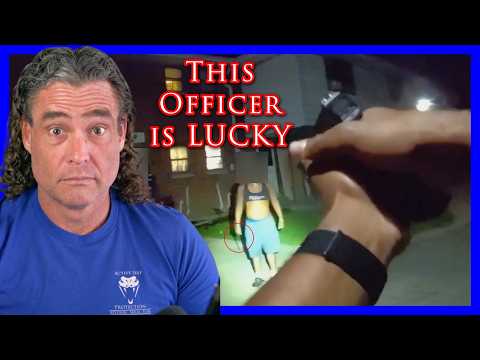
Felonious Absconder Pulls Gun On Cop | Active Self Protection

Published on May 7, 2026
Duration: 15:27

This video analyzes a critical incident where a felonious absconder, known to be armed and dangerous, pulled a gun on a police officer. The analysis covers the officer's initial approach, the use of a taser, the decision to draw a firearm, the exchange of gunfire, and crucial follow-up actions. It emphasizes the importance of situational awareness, proper tactical decision-making, and the mental preparedness required for law enforcement officers in high-stress encounters.


Quick Summary

During a high-risk motorcycle stop, an officer drew a firearm due to the suspect being a known felon flagged as armed and dangerous. While a taser was deployed, experts advise against carrying both simultaneously due to 'slip and capture errors.' The officer's actions, including drawing a firearm and subsequent use of deadly force, were deemed justified given the suspect's history and actions, including reaching for a weapon.

Chapters

  1. 00:02Introduction and Incident Overview
  2. 00:17Welcome and Sponsor Message
  3. 00:52Background of the Suspect and Stop
  4. 01:27Officer's Commands and Suspect's Actions
  5. 01:37Taser Deployment and Suspect's Reaction
  6. 01:53Officer's Escalation to Firearm
  7. 02:09Shots Fired and Suspect Down
  8. 02:14Officer's Radio Communication
  9. 03:11Outcome and Suspect's Demise
  10. 03:33Analysis of Officer's Approach
  11. 04:08Justification for Drawing Firearm
  12. 04:30Challenges of Motorcycle Stops
  13. 04:53Suspect's Decision to Flee on Foot
  14. 05:03Suicide by Cop Theory
  15. 05:08Understanding Law Enforcement Actions
  16. 05:34Foreknowledge and Officer's Advantage
  17. 05:41Officer's Pursuit and Citizen Safety
  18. 05:49Critique of Taser and Firearm Combination
  19. 06:22Advice: One Tool at a Time
  20. 07:15When to Transition to Firearm
  21. 07:39Suspect's Deceptive Surrender
  22. 08:07Consequences of Reaching for a Weapon
  23. 08:14Awareness of Unseen Hands
  24. 08:21Importance of Movement and Footwork
  25. 08:45Benefits of Distance and Movement
  26. 09:05Motionless Target is Easier to Hit
  27. 09:10Suspect Pulled a Gun
  28. 09:15Justification for Officer's Shooting
  29. 09:34Officers as Private Citizens with Rights
  30. 09:46Deadly Threat Assessment
  31. 09:57Officer's Actions and Necessity
  32. 10:03Mental Preparation for Lethal Force
  33. 10:14Training for Taking a Life
  34. 10:46Mental and Emotional Fitness
  35. 11:07Officer's Marksmanship Improvement
  36. 11:14Distance Estimation and Badge Cam Effect
  37. 11:34Challenge of Single-Handed Shooting
  38. 11:51Two Hands on the Gun is Superior
  39. 12:09Public Perception vs. Officer's Reality
  40. 12:23Split-Second Decision Making
  41. 12:43Suspect's Motivation and Choice
  42. 13:02Continued Firearm Engagement
  43. 13:13Suspect No Longer Poses Threat
  44. 13:20Tactical Lateral Movement
  45. 13:41Follow-Up Actions and Positioning
  46. 13:46Officer's Overall Performance
  47. 13:48Post-Shooting Considerations
  48. 14:09Possibility of Secondary Threats
  49. 14:18Stellar Radio Communication
  50. 14:47Importance of Clear Radio Calls
  51. 14:57Approaching a Suspect After Shooting
  52. 15:06Suspect Pulled a Gun on Cops
  53. 15:12Officer's Phenomenal Job
  54. 15:19Suspect Chose a Gunfight

Frequently Asked Questions

What factors justified the officer drawing a firearm during the motorcycle stop?

The suspect was a known felon with active warrants and probation violations, flagged as armed and dangerous. The officer's personal knowledge of the suspect's history and the high-risk nature of the stop, combined with the suspect's actions, justified the immediate draw of a firearm.

Why is it discouraged for officers to carry both a taser and a firearm simultaneously?

Carrying both a taser and a firearm simultaneously increases the risk of 'slip and capture errors,' where an officer might accidentally engage the firearm's trigger instead of the taser's. Experts advise dropping the taser if a firearm is deemed necessary.

What tactical advice is given regarding suspect movement and officer positioning?

Officers are advised to move their feet, laterally or backward, when a suspect is perceived to be reaching for a weapon. This increases the officer's survivability by making them a harder target and improving their own accuracy.

How important is radio communication during an officer-involved shooting?

Effective radio communication is critical. In this incident, the officer's clear and concise calls, including 'shots fired by police' and 'suspect down,' allowed responding units to manage the scene safely and effectively.

More Self Defense Videos You Might Like

More from Active Self Protection

View all →