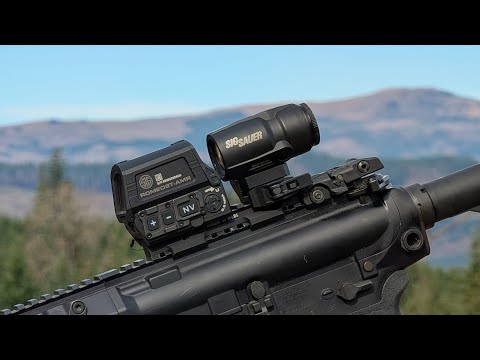
Ep-16: AR-15 Optics Bible! BUIS vs. Red Dot Sight vs. Holographic vs. Prism vs. LPVO vs. Magnifiers

Published on April 7, 2023
Duration: 37:30

This video provides a comprehensive guide to AR-15 optics, covering BUIS, red dots, holographic sights, prism optics, and LPVOs. It explains key concepts like Height Over Bore and Sight Radius, and details the pros and cons of each optic type. The discussion includes technical aspects such as co-witnessing, parallax, focal planes, and the functionality of magnifiers, offering practical advice for choosing the right optic for specific shooting missions.

Quick Summary

Prism sights use prisms for magnification and feature etched reticles that remain visible even if the battery dies, making them ideal for shooters with astigmatism. They offer a fixed magnification and are generally more robust than traditional scopes.

Chapters

  1. 00:00Intro: AR-15 Sights & Optics
  2. 01:22Non-Magnified vs. Magnified Optics
  3. 01:56Concept: Height Over Bore
  4. 03:11Concept: Sight Radius
  5. 04:14Backup Iron Sights (BUIS)
  6. 07:50Red Dot Sights (Reflex)
  7. 10:09Co-witnessing Concepts
  8. 11:46Parallax & Red Dot Types
  9. 19:06Holographic Sights
  10. 23:28Fixed Prism Optics
  11. 26:07Low Power Variable Optics (LPVO)
  12. 28:13First vs. Second Focal Plane
  13. 35:07Red Dot Magnifiers

Frequently Asked Questions

What are the main types of AR-15 optics discussed?

The video covers Backup Iron Sights (BUIS), Red Dot Sights, Holographic Sights, Prism Optics, and Low Power Variable Optics (LPVOs). It also touches upon magnifiers used with red dots.

What is 'Height Over Bore' and why is it important for AR-15s?

Height Over Bore is the distance between the sight line and the barrel's center line. On AR-15s, this is typically around 2.5 inches, affecting point-blank accuracy out to about 25 yards.

What's the difference between First Focal Plane (FFP) and Second Focal Plane (SFP) reticles?

In FFP optics, the reticle size changes with magnification, keeping holdover points accurate at all zoom levels. In SFP, the reticle size stays constant, making holdovers accurate only at a specific magnification.

Are prism sights good for people with astigmatism?

Yes, prism sights are often recommended for shooters with astigmatism because they use etched reticles that are visible without batteries and don't rely on reflection technology that can exacerbate astigmatism symptoms.

Related News

All News →

More Tactical & Gear Videos You Might Like

More from AT3 Tactical

View all →