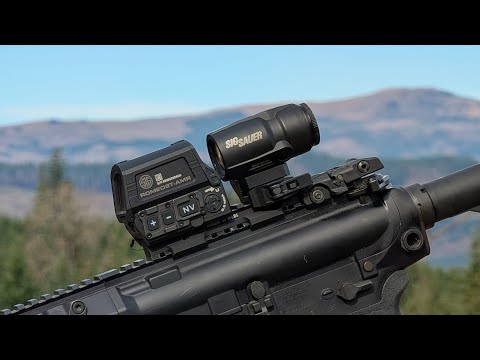
Ep-16: AR-15 Optics Bible! BUIS vs. Red Dot Sight vs. Holographic vs. Prism vs. LPVO vs. Magnifiers

Published on April 7, 2023
Duration: 37:30

This comprehensive guide, presented with high authority by an expert instructor, breaks down the various AR-15 optic options, from BUIS to LPVOs. It explains critical concepts like height over bore, sight radius, parallax, and focal planes (FFP vs. SFP). The video details the pros and cons of red dots, holographic sights, prism scopes, and magnifiers, helping viewers make informed decisions based on their specific shooting mission.

Quick Summary

AR-15 optics are broadly categorized into non-magnified (iron sights, red dots, holographic) and magnified (prism, LPVOs, scopes). Key concepts include Height Over Bore for optimal cheek weld and Sight Radius for precision. FFP reticles scale with magnification, while SFP reticles remain constant. BUIS offer essential reliability.

Chapters

  1. 00:00Introduction to AR-15 Sights
  2. 01:22Non-Magnified vs. Magnified Optics
  3. 01:56Concept: Height Over Bore
  4. 03:11Concept: Sight Radius
  5. 04:14Backup Iron Sights (BUIS)
  6. 07:50Red Dot Sights (Reflex)
  7. 10:09Co-witnessing Concepts
  8. 11:46Parallax and Red Dot Types
  9. 19:06Holographic Sights
  10. 23:28Fixed Prism Optics
  11. 26:07Low Power Variable Optics (LPVO)
  12. 28:13First vs. Second Focal Plane
  13. 35:07Red Dot Magnifiers

Frequently Asked Questions

What are the main categories of AR-15 optics discussed?

The video categorizes AR-15 optics into non-magnified types like iron sights, red dots, and holographic sights, and magnified types including prism sights, LPVOs, traditional scopes, and magnifiers. Understanding these categories is key to selecting the right optic for your needs.

How does 'Height Over Bore' affect AR-15 accuracy?

Height Over Bore is the distance between the sight line and the barrel's center line. On AR-15s, it's typically around 2.5 inches for a comfortable cheek weld. This measurement impacts point-blank accuracy, especially at very close ranges (under 25 yards).

What is the difference between First Focal Plane (FFP) and Second Focal Plane (SFP) reticles?

In FFP optics, the reticle scales proportionally with magnification, meaning holdover points remain accurate at all zoom levels. In SFP optics, the reticle size stays constant, making holdover points accurate only at a specific magnification, usually the highest setting.

Why are Backup Iron Sights (BUIS) important for an AR-15?

BUIS are crucial for reliability as they don't require batteries and are less fragile than electronic optics. They offer a dependable aiming solution that is typically effective out to 300 meters, serving as a vital backup if the primary optic fails.

Related News

All News →

More Tactical & Gear Videos You Might Like

More from AT3 Tactical

View all →