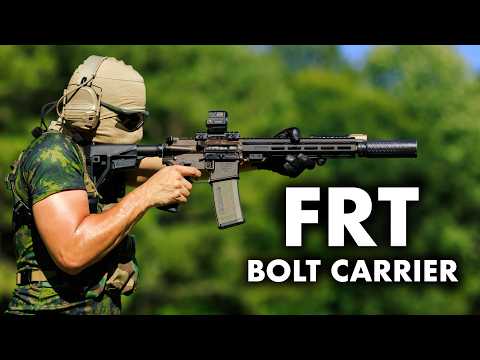
Hodge BCG Physical

Published on February 21, 2020
Duration: 16:01

This video provides a detailed physical inspection of a new Hodge bolt carrier group (BCG) by School of the American Rifle. It covers the nitride finish quality, firing pin protrusion measurement, extractor and ejector function checks, magnetism testing, and internal carrier bore inspections using a borescope and specialized gauges. The instructor highlights the refined finish of the Hodge BCG and discusses the implications of internal bore tolerances for gas efficiency.


Quick Summary

The Hodge Bolt Carrier Group (BCG) exhibits a highly refined nitride finish with minimal machining marks. Firing pin protrusion was measured at 29.5 thousandths of an inch, exceeding the .028-inch minimum. While a magnetic firing pin isn't ideal, it's manageable with brass-cased ammo.

Chapters

  1. 00:00Introduction to Hodge BCG Physical
  2. 00:52Nitride Finish Quality
  3. 01:51Firing Pin Inspection & Protrusion
  4. 02:40Extractor Inspection
  5. 03:32Ejector Inspection
  6. 04:00Bolt Face & Roll Pin Check
  7. 04:32Magnetism Check
  8. 06:14Extractor & Bolt Tail Gauge Check
  9. 06:40Carrier Key Inspection
  10. 07:51Carrier Overall Length Measurement
  11. 09:00Headspace Inspection
  12. 09:38Carrier Internal Bore Gauging
  13. 11:30Reverse Carrier Key Screw Test
  14. 12:34Borescope Interior Inspection
  15. 15:03Summary of Findings

Frequently Asked Questions

What is the quality of the nitride finish on the Hodge BCG?

The Hodge BCG features a highly refined nitride finish on the bolt, carrier, and carrier key. It's noted for having minimal machining marks, making it one of the most polished nitride finishes observed on such components.

How is firing pin protrusion measured and what is the acceptable range?

Firing pin protrusion is measured with a specialized gauge. For the Hodge BCG, it was measured at 29.5 thousandths of an inch, which is considered very good and exceeds the minimum specification of .028 inches.

Can a magnetic firing pin cause issues with an AR-15?

A magnetic firing pin is not always a problem, especially with brass-cased ammunition. However, it can cause issues with steel-cased ammunition by shaving projectile or case material and attracting magnetic debris.

What do internal bore gauges on a BCG indicate?

Internal bore gauges check the carrier's tolerances for the bolt shoulder, gas ring run, and rear bolt tail seal. Falling into the yellow range, as seen with the Hodge BCG, suggests slightly looser tolerances which can impact gas efficiency but are designed for specific firearm configurations.

More Tactical & Gear Videos You Might Like

More from School of the American Rifle

View all →