how many KYDEX does it take to stop a bullet?

Published on July 15, 2016
Duration: 6:32

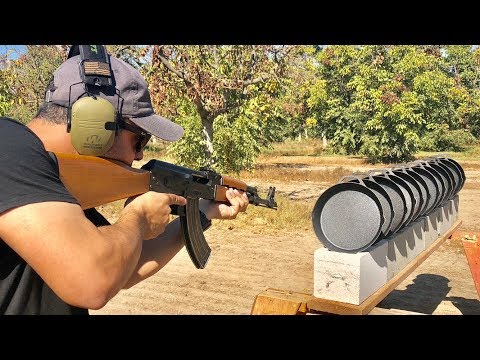
This video demonstrates a practical ballistic penetration test using Kydex material, a common component in firearm holsters. Conducted by Edwin Sarkissian, the experiment evaluates how many sheets of Kydex are required to stop 9mm and 5.56 caliber rounds. The results provide valuable insights into the protective capabilities of Kydex against different ammunition types and calibers.

Quick Summary

In a ballistic test, 23 sheets of Kydex stopped a 9mm hollow point, while 29 sheets were required for a 9mm FMJ round. Similarly, 29 sheets of Kydex stopped a 5.56 caliber round, demonstrating the material's penetration resistance.

Chapters

  1. 00:00Intro to Kydex Material
  2. 00:53Kydex Testing Setup
  3. 01:169mm Bullet Test Setup
  4. 01:539mm Hollow Point and FMJ Test
  5. 02:40Combined Kydex Thickness Test
  6. 03:21Hollow Point 9mm Result
  7. 04:02FMJ 9mm Result
  8. 04:335.56 Test Setup and Initial Result
  9. 05:255.56 Tumbling and Penetration
  10. 05:52Final 5.56 Result
  11. 06:09Conclusion and Thanks

Frequently Asked Questions

How many sheets of Kydex does it take to stop a 9mm bullet?

In this test, 23 sheets of Kydex stopped a 9mm hollow point round, while 29 sheets were needed to stop a 9mm FMJ round. The total thickness and specific Kydex sheet dimensions would influence these results.

Can Kydex stop a 5.56 round?

Yes, in this experiment, 29 sheets of Kydex were sufficient to stop a 5.56 caliber round, similar to the number of sheets required for 9mm FMJ. This indicates Kydex has some ballistic resistance, though it's not designed as primary armor.

What is the difference in penetration between 9mm FMJ and hollow point in Kydex?

The 9mm FMJ round penetrated 29 sheets of Kydex, while the 9mm hollow point round penetrated 23 sheets. This suggests FMJ ammunition has greater penetration capability through Kydex in this specific test configuration.

What Kydex thicknesses were used in the bullet test?

The test utilized Kydex sheets with thicknesses of 0.06 inches and 0.08 inches. These were combined to achieve greater total thickness for the ballistic penetration experiments.

Related News

All News →

More Tactical & Gear Videos You Might Like

More from Edwin Sarkissian

View all →