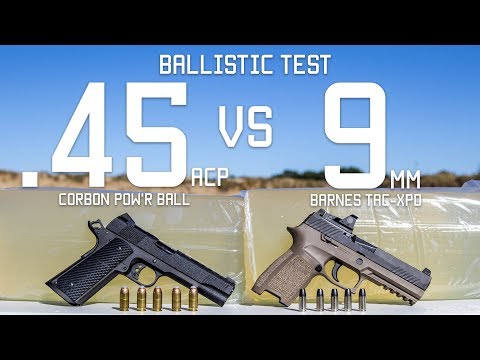
.45 vs. 9 mm Ballistic Test Ammo Comparison #shorts #training #military

Published on June 11, 2026
Duration: 2:02

This ballistic test compares .45 ACP Corbon Powerball and 9mm Barnes XPD ammunition fired at 10 meters into ballistic gelatin. The .45 ACP demonstrated significant wound cavitation, with material exiting the front, while the 9mm showed less cavitation but penetrated slightly further. The test highlights the trade-offs between expansion and penetration, and the .45 ACP's polymer ball is noted as a potential solution for firearms with feeding issues with traditional hollow points.

Quick Summary

In a ballistic test at 10 meters, the .45 ACP Corbon Powerball (165gr) demonstrated greater wound cavitation than the 9mm Barnes XPD (115gr), with material exiting the gelatin block. Both rounds penetrated to approximately 12-13 inches. The Corbon Powerball's polymer ball aids feeding reliability in firearms.

Chapters

  1. 00:00Test Setup and Distance
  2. 00:03Cavitation Comparison
  3. 00:11Over-penetration Concerns
  4. 00:179mm Barnes XPD Test Results
  5. 00:34.45 ACP Corbon Powerball Test Results
  6. 00:42Material Expulsion from Wound
  7. 00:52Penetration Depth Analysis
  8. 00:58Impact of Clothing Layers
  9. 01:12Corbon Powerball Polymer Ball Feature
  10. 01:16Support Tactical Rifleman

Frequently Asked Questions

What were the key differences observed in the ballistic test between .45 ACP Corbon Powerball and 9mm Barnes XPD?

The .45 ACP Corbon Powerball created significantly more wound cavitation, with material exiting the front of the gelatin block. The 9mm Barnes XPD showed less cavitation but penetrated to a similar depth, around 12-13 inches. The .45 ACP's polymer ball also aids feeding reliability.

What is the significance of wound cavitation in ballistic testing?

Wound cavitation in ballistic testing indicates the energy transfer and expansion of a bullet as it passes through tissue. Larger cavitation suggests greater energy transfer and potential for tissue damage, while material expulsion from the wound channel highlights significant expansion and energy dump.

How does the polymer ball in the Corbon Powerball ammunition affect its performance?

The polymer ball in the Corbon Powerball acts similarly to a round nose, which can improve feeding reliability in firearms that may experience issues with traditional hollow-point bullets. This makes it a viable option for those seeking expanded bullet performance without potential feeding malfunctions.

What factors can influence bullet penetration depth in ballistic tests?

Bullet penetration depth can be influenced by factors such as bullet construction (e.g., expansion characteristics), velocity, caliber, and the medium being penetrated. Adding layers of clothing like denim, as seen in FBI testing protocols, can also significantly reduce penetration depth.

Related News

All News →

More Training & Techniques Videos You Might Like

More from Tactical Rifleman

View all →