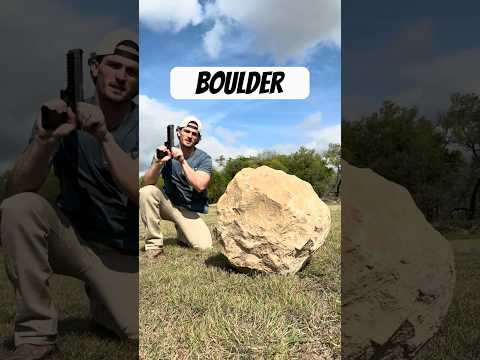
9mm vs 380: Not Even Close?

Published on June 26, 2026
Duration: 13:16

This video provides a comparative analysis of 9mm and .380 ACP cartridges, focusing on their effectiveness in self-defense scenarios. It details ballistics testing, including penetration through sand, drywall, and steel, using various ammunition types like FMJ, Gold Dot, and XTP. The instructor, with apparent expertise in ballistics and firearms, demonstrates that while 9mm generally offers more muzzle energy and penetration, .380 ACP can still be effective, especially with modern self-defense ammunition, challenging the notion that .380 is significantly underpowered.


Quick Summary

While 9mm generally offers more muzzle energy and heavier projectiles than .380 ACP due to cartridge length, ballistic tests show the .380 can be effective for self-defense with modern ammunition. Penetration tests reveal differences, with 9mm typically outperforming .380 against steel, but both struggle with thicker materials. Drywall tests indicate varying performance based on bullet type, with some .380 loads showing concerning over-penetration.

Chapters

  1. 00:00Introduction: 380 vs 9mm Perceptions
  2. 00:25Cartridge Differences: Diameter & Projectile Weight
  3. 00:42Initial Velocity Tests: FMJ Ammunition
  4. 00:52Self-Defense Ammunition: Gold Dots
  5. 01:06Understanding +P Loadings
  6. 01:17Comparative Velocity: XTP +P Loads
  7. 01:25Muzzle Energy Comparison
  8. 01:37Sand Penetration Test
  9. 02:10Steel Penetration Test: 1/16 Inch
  10. 02:34Steel Penetration Test: 1/8 Inch
  11. 03:01Drywall & Ballistic Gel Test: 380 Gold Dot
  12. 03:30Drywall & Ballistic Gel Test: 9mm Gold Dot +P
  13. 03:47Drywall & Ballistic Gel Test: 380 FMJ
  14. 04:05Drywall & Ballistic Gel Test: 9mm XTP +P
  15. 04:27Drywall & Ballistic Gel Test: 9mm Gold Dot
  16. 04:49Conclusion: 380 vs 9mm Effectiveness

Frequently Asked Questions

What is the primary difference between 9mm and .380 ACP cartridges?

The main difference between 9mm and .380 ACP cartridges lies in their overall length, which allows the 9mm to utilize much heavier projectiles. While they share the same projectile diameter, the 9mm's design generally enables greater muzzle energy and penetration capabilities.

Can a .380 ACP be effective for self-defense compared to a 9mm?

Yes, a .380 ACP can be effective for self-defense, especially with modern ammunition like Gold Dot or XTP. While 9mm generally offers more muzzle energy and penetration, ballistic tests show that a .380 can still perform adequately, challenging the notion that it is significantly underpowered.

How did 9mm and .380 ACP perform in steel penetration tests?

In tests with a 1/16-inch steel plate, the 9mm easily penetrated while the .380 +P barely made a mark. However, when the steel thickness increased to 1/8-inch, neither cartridge could penetrate, suggesting limited effectiveness against hardened steel shields for both calibers.

What were the results of the drywall and ballistic gel penetration tests?

In drywall tests, the .380 Gold Dot penetrated the gel but didn't reach the bystander, while the 9mm Gold Dot and XTP rounds penetrated the gel, drywall, and the bystander bottle. The .380 FMJ also showed concerning over-penetration in this test.

Related News

All News →

More Training & Techniques Videos You Might Like

More from Banana Ballistics

View all →