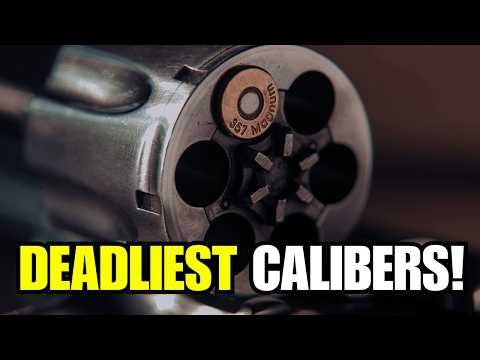
How Deadly Is .45 ACP These Facts Will Shock Every 9mm Fan

Published on February 24, 2026
Duration: 19:02

This video provides an in-depth look at the .45 ACP cartridge, dispelling myths and highlighting its modern performance. It details the cartridge's historical context, its effective 'fight stopper' reputation, and its manageable recoil profile, especially in steel-framed firearms like the 1911. The content also touches upon enhanced .45 ACP variants and its suitability for various platforms, including submachine guns and pistol caliber carbines.

Quick Summary

The .45 ACP cartridge is renowned for its effectiveness as a 'fight stopper,' offering a balance of power and control. Its lower operating pressure (around 21,000 PSI) results in a manageable recoil impulse, often described as a 'roll' rather than a 'jolt,' especially when fired from heavier, steel-framed firearms like the 1911.

Chapters

  1. 00:00Introduction to .45 ACP
  2. 00:56Historical Significance and Feel
  3. 01:36Performance Beyond Paper Numbers
  4. 02:21Origins: The Philippines and the Need for Stopping Power
  5. 03:03Browning's Solution: The .45 ACP Cartridge
  6. 03:48.45 ACP in World War I and the M1917 Revolver
  7. 04:29The Half-Moon Clip Innovation
  8. 05:37Debunking .45 ACP Recoil Myths
  9. 06:04Low Pressure and Recoil Impulse
  10. 06:31Factors Affecting Recoil Perception
  11. 07:11Pushing the .45 ACP: Enhanced Variants
  12. 07:37.45 Super Performance
  13. 08:07.460 Rowland: A Powerful Evolution
  14. 08:28.45 GAP: A Compact Alternative
  15. 09:11Deep Dive: The .45 GAP Cartridge
  16. 11:07.45 ACP in Submachine Guns
  17. 11:19Thompson Submachine Gun Experience
  18. 11:46The Grease Gun (M3) and its Effectiveness
  19. 12:04Modern SMGs: The Vector in .45 ACP
  20. 12:39.45 ACP's Advantage in Suppression
  21. 12:49Reloading the .45 ACP: Ease and Rewards
  22. 13:21Bullet Selection and Versatility
  23. 13:49Powder Selection and Forgiveness
  24. 14:19Value for Reloaders
  25. 14:29.45 ACP in Close-Quarters Combat (Vietnam Tunnels)
  26. 15:14The Downside: Blast in Enclosed Spaces
  27. 16:11.45 ACP in Long Guns: Carbines and Rifles
  28. 16:21Marlin Camp Carbine .45
  29. 16:57Modern Pistol Caliber Carbines (PCCs)
  30. 17:21Lever Action Platforms
  31. 17:40Specialty Loads: Rat/Snake Shot
  32. 18:05Conclusion: The Enduring Relevance of .45 ACP
  33. 18:12Why Carry .45 ACP: Consistency Over Trend

Frequently Asked Questions

What makes the .45 ACP recoil manageable?

The .45 ACP operates at lower pressures (around 21,000 PSI), which results in a recoil impulse that feels more like a 'roll' or a solid push rather than a sharp 'jolt'. This is further aided by the weight of steel-framed firearms, which absorbs energy.

Why was the .45 ACP developed?

The .45 ACP was developed in response to US soldiers in the Philippines needing a more effective 'manstopper' round than the .38 Long Colt revolvers, which were failing to stop charging Moros fighters.

How does the .45 ACP perform in modern firearms?

With modern hollow points and better metallurgy, the .45 ACP performs competitively with newer cartridges. Its design balances power with control, making it effective in various platforms, including modern striker-fired pistols, PCCs, and even revolvers.

Is the .45 ACP suitable for suppressed shooting?

Yes, the .45 ACP is naturally subsonic, meaning its bullets travel below the speed of sound. This makes it an excellent choice for suppressed firearms, as it avoids the loud sonic crack associated with supersonic rounds.

Related News

All News →

More Training & Techniques Videos You Might Like

More from Line45

View all →