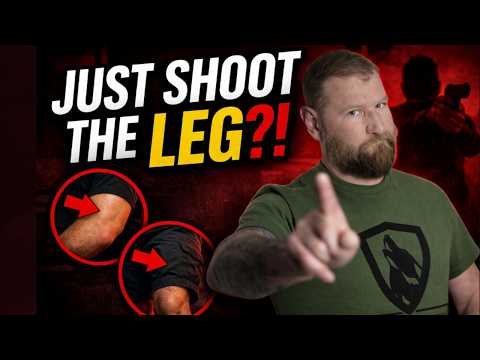
Why You Don’t Shoot For The Head In Self-Defense

Published on June 20, 2026
Duration: 2:03

This video emphasizes that in self-defense, the primary goal is to stop the threat as quickly as possible, not necessarily to achieve headshots. Instructor Colion Noir demonstrates through timed drills that prioritizing speed often leads to more effective center mass hits, even if the group is larger, compared to slower, tighter headshots. He highlights the trade-off between speed and accuracy, suggesting that attempting headshots under duress can be slower and less reliable, potentially resulting in missed shots or shots that miss the intended target area entirely.


Quick Summary

In self-defense, the priority is to stop the threat rapidly. While headshots may seem decisive, aiming for center mass is often more effective due to the speed and accuracy trade-off. Faster, reliable hits on a larger target area like the torso are generally preferred over slower, potentially missed headshots when immediate incapacitation is required.

Chapters

  1. 00:00Introduction: Headshots vs. Threat Stop
  2. 00:03The Misconception of Headshots
  3. 00:07Goal: Stop the Attack, Not Kill
  4. 00:12Headshots Aren't Always the Flex
  5. 00:17Anyone Can Hit a Head (With Time)
  6. 00:21Speed and Accuracy Trade-off
  7. 00:29Timed Drill: Headshots
  8. 00:36Headshot Group Analysis
  9. 00:44Timed Drill: Body Shots
  10. 00:57Body Shot Group Analysis
  11. 01:15The Real Goal: Stop the Threat

Frequently Asked Questions

Why is aiming for the head not recommended in self-defense?

In self-defense, the primary goal is to stop the threat as quickly as possible. Attempting headshots can be slower and less reliable under duress, potentially leading to missed shots or delayed incapacitation of the attacker. Prioritizing center mass hits is generally more effective for rapidly neutralizing a threat.

What is the relationship between speed and accuracy in shooting?

Speed and accuracy often exist on a lever: as you increase your shooting speed, your accuracy tends to decrease, and vice versa. In a self-defense situation, finding the optimal balance to stop the threat quickly and effectively is key, which often means prioritizing speed on a larger target area like center mass.

How does target size affect shooting speed and accuracy?

Larger targets, such as the torso (center mass), are generally easier and faster to hit accurately under pressure compared to smaller targets like the head. While headshots might seem decisive, the difficulty in acquiring them quickly can make them less practical for immediate threat neutralization.

What is the most effective target area in a self-defense shooting?

The most effective target area in a self-defense shooting is typically center mass. Hits to the torso are more likely to incapacitate an attacker quickly due to the presence of vital organs and larger surface area, making it a more reliable target under stress than the head.

Related News

All News →

More Training & Techniques Videos You Might Like

More from Colion Noir

View all →