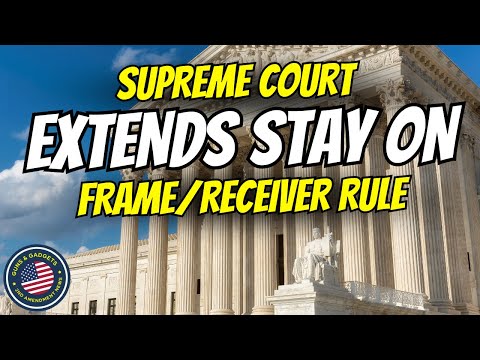
BREAKING: BAD 2A NEWS: SCOTUS Split on Frame & Receiver Rule

Published on August 8, 2023
Duration: 6:24

The VSO Gun Channel provides an expert-level breakdown of the Supreme Court's decision regarding the ATF's frame and receiver rule in the VanDerStok v. Garland case. The Supreme Court granted a stay, allowing the ATF rule to be enforced while litigation continues. This decision impacts businesses like Tactical Machining and Polymer80, forcing them to cease operations again. The ruling was a 5-4 split, indicating potential future challenges.


Quick Summary

The Supreme Court granted the ATF's application for a stay, allowing the frame and receiver rule to be enforced during ongoing litigation. This 5-4 decision means businesses affected by the rule, like Tactical Machining and Polymer80, face renewed operational challenges. The case's future hinges on potential Supreme Court review via a writ of certiorari.

Chapters

  1. 00:00Introduction: VanDerStok v. Garland Case
  2. 00:23Lower Court Rulings Explained
  3. 00:49Supreme Court Appeal and Stay Process
  4. 01:10FPC Brief and ATF Filing
  5. 01:37SCOTUS Decision on Stay Application
  6. 01:55Reading the Supreme Court Order
  7. 03:28Interpreting the Decision and Next Steps
  8. 04:06Certiorari and Stay Implications
  9. 05:09Analysis of the 5-4 SCOTUS Vote Split
  10. 05:48Impact on Businesses

Frequently Asked Questions

What was the Supreme Court's decision regarding the ATF's frame and receiver rule?

The Supreme Court granted the ATF's application for a stay, meaning the rule can be enforced while litigation continues. This decision was a 5-4 split, with Justices Thomas, Alito, Gorsuch, and Kavanaugh dissenting.

What is the significance of the Supreme Court granting a stay in the VanDerStok v. Garland case?

Granting a stay allows the ATF's frame and receiver rule to remain in effect, impacting businesses that manufacture or sell these components. The case will now proceed to further appeals, potentially back to the Fifth Circuit or even the Supreme Court on its merits.

How did the lower courts rule on the ATF's frame and receiver rule?

Initially, the District Court ruled the ATF's rule invalid and ordered its deletion. The ATF appealed, and the Fifth Circuit Court of Appeals partially vacated the rule, leading to the ATF's appeal to the Supreme Court.

What are the potential future implications of the Supreme Court's stay decision?

The Supreme Court may consider the case on its merits if the ATF applies for a writ of certiorari. If granted, the stay would continue. If denied, the stay would terminate, and the rule enforcement would stop.

Related News

All News →

More 2nd Amendment & Law Videos You Might Like

More from The VSO Gun Channel

View all →