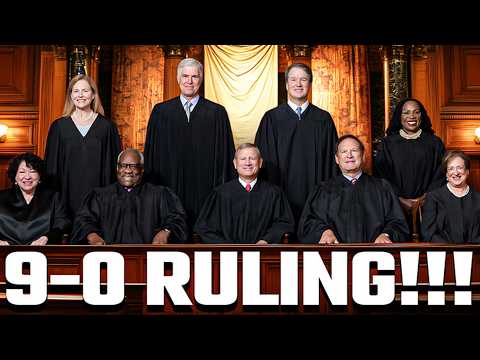
NOW DEVELOPING! Supreme Court Issues 9-0 Unanimous Decision With Major Nationwide Impacts!

Published on February 7, 2026
Duration: 9:33

This video provides an expert breakdown of the Supreme Court's unanimous 9-0 decision in Martin v. United States. The speaker, identified as an 'Armed Scholar,' critically analyzes the ruling's implications for law enforcement accountability, particularly concerning botched raids and the government's use of the 'discretionary-function exception' to avoid liability under the Federal Tort Claims Act. The analysis highlights the DOJ's ongoing efforts to circumvent the ruling.

Quick Summary

The Supreme Court's 9-0 decision in Martin v. United States ruled that the 'discretionary-function exception' was applied too broadly by the 11th Circuit. Law enforcement immunity requires decisions to be grounded in legitimate policy choices, not just arbitrary mistakes. The DOJ is attempting to argue that surveillance errors are discretionary to maintain immunity.

Chapters

  1. 00:00Introduction: Botched FBI Raid Case
  2. 02:12Background: Martin v. United States (2017)
  3. 03:47Supreme Court's 9-0 Decision Explained
  4. 04:12DOJ's Current Legal Strategy & Immunity Claims
  5. 05:23Plaintiffs' Argument: Ministerial Duty vs. Policy
  6. 06:43Implications for Law Enforcement Accountability

Frequently Asked Questions

What was the Supreme Court's unanimous decision in Martin v. United States?

The Supreme Court issued a 9-0 unanimous decision stating that the 11th Circuit applied the 'discretionary-function exception' too broadly. Law enforcement decisions must be grounded in legitimate policy choices to receive immunity under the Federal Tort Claims Act.

How does the DOJ attempt to avoid accountability after the Supreme Court ruling?

The DOJ is doubling down by arguing that agents' mistakes in surveillance and navigation during raids are discretionary decisions. This strategy aims to maintain government immunity despite the Supreme Court's ruling that such decisions must be based on legitimate policy.

What is the significance of the 'discretionary-function exception' in law enforcement cases?

This exception under the Federal Tort Claims Act shields the government from liability for certain actions. However, the Supreme Court clarified that it only applies if the decision involved an element of judgment or choice and was based on actual government policy.

What are the potential consequences if the DOJ's current legal strategy is successful?

If the DOJ's position is accepted, it could insulate all botched raids from lawsuits by labeling any mistake as 'discretion.' This would effectively remove legal remedies for victims of reckless or negligent law enforcement conduct.

Related News

All News →

More 2nd Amendment & Law Videos You Might Like

More from Armed Scholar

View all →