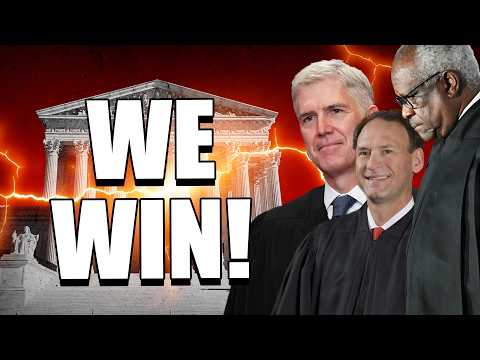
Supreme Court Oral Arguments Could Reshape the Second Amendment

Published on March 5, 2026
Duration: 19:22

This video discusses the Supreme Court oral arguments in United States v. Hmani, focusing on the potential impact on Second Amendment rights. It highlights the core issue: whether the federal government can ban individuals from owning firearms based on their status as admitted marijuana users, and the precedent this could set. The discussion emphasizes the importance of the Bruen test, requiring historical analogs for firearm restrictions, and the potential ramifications if broad categories of people are disarmed without such justification.

Quick Summary

The Supreme Court case United States v. Hmani examines whether federal law can prohibit admitted marijuana users from owning firearms. The core constitutional question revolves around the precedent set for disarming entire classes of people and the application of the Bruen test, which requires historical analogs for such restrictions.

Chapters

  1. 00:00Introduction to US v. Hmani
  2. 00:21CRPA TV Welcome and Case Overview
  3. 01:35Background of the Hmani Case
  4. 03:54Amicus Brief Argument: Historical Categories
  5. 05:03Disarming Broad Classes of People
  6. 06:03The Bruen Test and Historical Analogs
  7. 07:43Hmani as the Vessel for Argument
  8. 09:42CRPA Amicus Brief on Historical Disarming
  9. 09:58Oral Arguments and Justice Questions
  10. 11:36Legislature's Role in Bruen Analysis
  11. 12:05Categorization of Marijuana
  12. 13:01Marijuana as a Schedule I Drug
  13. 14:42Comparison to Alcohol Users
  14. 15:01As Applied vs. Facial Challenge
  15. 16:40Optimism and Case Outlook
  16. 17:29Downsides and Upsides of Ruling
  17. 18:42Conclusion and Call to Action

Frequently Asked Questions

What is the central issue in the Supreme Court case United States v. Hmani?

The central issue in United States v. Hmani is whether the federal government can constitutionally prohibit admitted marijuana users from owning firearms, and the precedent this could set for disarming entire classes of people.

How does the Bruen test apply to the Hmani case?

The Bruen test requires that any law restricting the right to bear arms must have a clear historical analog. In Hmani, the argument is that disarming marijuana users lacks such a historical basis, making the federal prohibition unconstitutional under the Bruen standard.

Why is the classification of marijuana important in the Hmani case?

The classification of marijuana, particularly its federal Schedule I status alongside drugs like heroin, is important because it influences comparisons to other substances and historical legal precedents. Arguments are made that its actual impacts differ from other Schedule I drugs and may be more comparable to alcohol.

What are the potential ramifications of the Supreme Court's decision in Hmani?

A ruling against Hmani could set a precedent for disarming broad categories of people without historical justification. Conversely, a ruling in favor of Hmani could reinforce the Bruen test and protect the Second Amendment rights of law-abiding citizens, including those who use marijuana but are not impaired.

Related News

All News →

More 2nd Amendment & Law Videos You Might Like

More from CRPA TV

View all →