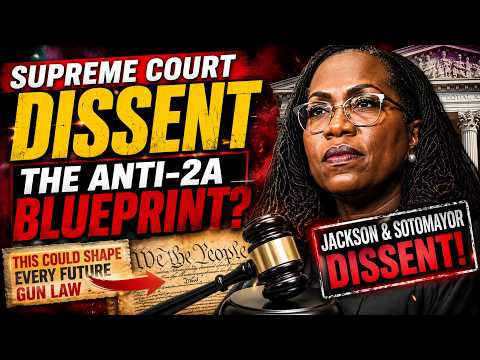
The Supreme Court Just Crushed This Anti-Gun Workaround

Published on June 26, 2026
Duration: 2:20

The Supreme Court has struck down Hawaii's law that treated concealed carry permits as invalid on private property open to the public without explicit owner permission. This ruling, a six-to-three decision, reaffirms the constitutional right to keep and bear arms for self-defense during daily life, preventing states from creating 'traps' by flipping the default presumption of carrying rights.

Quick Summary

The Supreme Court ruled 6-3 against Hawaii's law that required permit holders to get explicit permission to carry firearms on private property open to the public. This decision reaffirms the constitutional right to bear arms for self-defense during daily life and impacts similar laws in other states.

Chapters

  1. 00:00Major Supreme Court Gun Rights Rulings
  2. 00:02Hawaii's Anti-Gun Carry Law Explained
  3. 00:11Supreme Court Strikes Down Hawaii Law
  4. 00:16Details of the Hawaii Law
  5. 00:28Impact on Private Property
  6. 00:33Court's Reasoning: New Burden on Permit Holders
  7. 00:43Violation of Constitutional Right to Bear Arms
  8. 00:50The 'Scam' of Anti-Gun Workarounds
  9. 00:59Flipping the Default: Carry Rights on Private Property
  10. 01:07Every Door Becomes a Trap
  11. 01:11Strictest Permit Processes vs. Daily Carry
  12. 01:25Court Sees Through the Mess
  13. 01:27Quote: Hobbling Second Amendment Rights
  14. 01:36Impact Beyond Hawaii
  15. 01:46Hawaii's Defense Strategy
  16. 01:521865 Law Justification
  17. 02:02Full Breakdown Available
  18. 02:05Don't Ask for Permission to Use Your Rights

Frequently Asked Questions

What was the Supreme Court's ruling regarding Hawaii's gun carry law?

The Supreme Court, in a six-to-three decision, struck down Hawaii's law that required concealed carry permit holders to obtain express permission from private property owners before carrying firearms on their premises, even if open to the public. The court found this law violated the constitutional right to keep and bear arms.

How did Hawaii's law attempt to circumvent public carry rights?

Hawaii's law effectively reversed the default, requiring permit holders to get explicit permission to carry on private property open to the public. This created a situation where individuals could legally carry in public spaces but would commit a crime upon entering shops or restaurants without owner consent, turning every door into a potential trap.

What is the broader impact of this Supreme Court decision?

This ruling is significant because it reaffirms the right to carry arms for self-defense during daily life. It is expected to impact similar restrictive carry laws in other states, such as New York, New Jersey, Maryland, and California, by challenging their 'default flip' strategies.

What legal precedent did the Supreme Court rely on or reject?

The Supreme Court rejected Hawaii's attempt to justify its restrictive carry laws by referencing an 1865 law. Instead, the court emphasized that the Second Amendment protects the right of Americans to carry arms for self-defense as they go about their daily lives, not a right that needs constant permission.

Related News

All News →

More 2nd Amendment & Law Videos You Might Like

More from Colion Noir

View all →