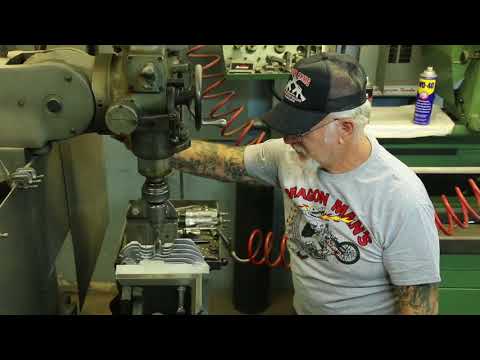
Dual plugging early sportster heads

Published on February 18, 2019
Duration: 9:41

This guide details the process of installing dual spark plugs into early Sportster cylinder heads. The procedure involves carefully breaking off existing fins, milling a flat surface, precisely drilling and tapping a new hole for the second spark plug, and then installing the plug. The primary benefit of dual plugging is improved fuel combustion efficiency and faster starting.


Quick Summary

Dual plugging early Sportster heads enhances engine performance by improving fuel combustion efficiency and enabling faster starting. The process involves breaking off fins, milling a flat surface, precisely drilling a 9/16 inch (14mm) hole, and then tapping threads for the second spark plug. Careful execution is required to avoid damaging the head.

Chapters

  1. 00:00Introduction & Project Overview
  2. 00:30Breaking Off Fins
  3. 00:53Milling the Surface
  4. 01:53Drilling for Spark Plug Location
  5. 02:34Smoothing the Surface
  6. 03:01Drilling the Main Hole
  7. 04:24Tapping the Threads
  8. 05:05Final Result & Benefits

Frequently Asked Questions

What are the benefits of dual plugging early Sportster heads?

Dual plugging early Sportster heads improves fuel combustion efficiency, leading to better engine performance and faster starting. This modification ensures a more complete burn of the fuel-air mixture in the combustion chamber.

What is the first step in dual plugging Sportster heads?

The initial step in dual plugging early Sportster heads is to carefully break away the original fins from the cylinder head. This prepares the surface for subsequent milling and drilling operations.

What size hole is drilled for the second spark plug?

A 9/16 inch (14 millimeter) diameter hole is drilled into the prepared surface of the cylinder head to accommodate the second spark plug, typically a Champion model.

What is the critical aspect of tapping threads for a dual plug setup?

When tapping threads for the second spark plug, it's crucial to apply consistent and correct tension. Too much pressure can strip the threads, while too little can also lead to stripping, so precise control is essential.

More Gunsmithing & DIY Videos You Might Like

More from Dragonman's

View all →