History Primer 168: British Enfield MkI Documentary

Published on November 29, 2022
Duration: 88:03

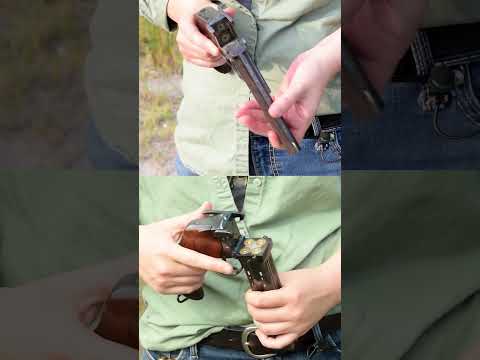
This video provides an in-depth look at the British Enfield Mark I revolver, detailing its complex development history and intricate mechanical design. It covers the firearm's unique features, such as its selective extraction system and modified Warnant lockwork, and demonstrates a partial disassembly process, highlighting the challenges and specificities of working with this historical piece. The production details and patent disputes surrounding its creation are also explored.

Quick Summary

The British Enfield Mark I revolver, adopted in 1880, features a selective extraction system for efficient ejection of spent casings while retaining loaded rounds. Its complex lockwork includes an automatic rebounding hammer, and it was designed for .450 Adams and later .455 Webley cartridges.

Chapters

  1. 00:21Introduction to the Enfield Mark I
  2. 00:40Physical Specifications
  3. 01:17Sponsor: Ballistol Oil
  4. 02:18Historical Context: British Revolver Development
  5. 05:46Early Breech-Loading Revolver Trials
  6. 09:01The Warnant Patent Revolver
  7. 14:17The Mystery of the Modified Lockwork
  8. 17:17The Coney Top Break Revolver
  9. 21:41The Galand Revolver Mechanism
  10. 23:52Owen Jones's Extraction System
  11. 29:02Enfield Tooling Up for Production
  12. 31:40Enfield Mark I Trials
  13. 34:14Detailed Look at the Enfield Mark I
  14. 36:38Loading and Ejection Mechanism
  15. 43:03Action Closed: Frame and Arbor
  16. 45:32Grip and Backstrap Removal
  17. 48:41Lockwork Analysis
  18. 52:40Animation: Operation and Ejection
  19. 55:17Ammunition Details
  20. 57:54Shooting Impressions
  21. 58:30Production and Cost
  22. 59:24Patent Disputes and Payments
  23. 63:00May's Impressions and Ergonomics

Frequently Asked Questions

What are the key features of the British Enfield Mark I revolver?

The Enfield Mark I is a large, black powder revolver featuring a selective extraction system, a modified Warnant lockwork with an automatic rebounding hammer, and a side gate for loading. It was adopted by the British Army in 1880 and is known for its robust, albeit complex, design.

How does the Enfield Mark I's ejection system work?

The Enfield Mark I utilizes a selective extraction system. When the top break action is opened, the cylinder moves forward slightly, allowing spent casings to fall free, while loaded cartridges remain in place. This system protects the internal mechanism from debris.

What ammunition was the Enfield Mark I designed for?

While initially intended for the Enfield Mark I cartridge, this ammunition experienced issues and was not widely issued. The revolver was temporarily issued with the .450 Adams cartridge until a suitable replacement, the Mark II cartridge (.455 caliber), was approved.

What are some common issues or design quirks of the Enfield Mark I?

The Enfield Mark I's sights are notably small and shallow, making aiming difficult. The selective extraction can sometimes require manual manipulation for stubborn cases, and the grip ergonomics can be challenging for smaller hands. The hammer pin screw is also reverse-threaded.

More Gunsmithing & DIY Videos You Might Like

More from C&Rsenal

View all →