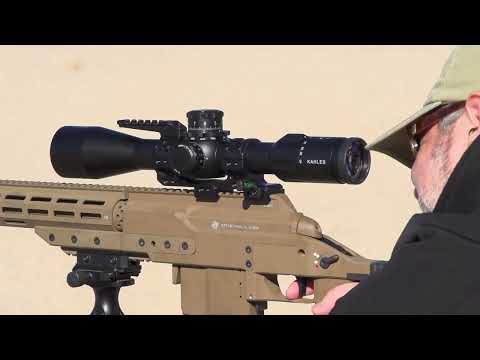
MOA vs MIL Scopes: What's the Difference? | Tactical Rifleman

Published on April 3, 2026
Duration: 7:44

This video explains the fundamental differences between Minutes of Angle (MOA) and Milliradians (MIL) in precision rifle scopes. It clarifies their definitions, how they translate to adjustments at distance, and discusses the practical implications for shooters. The instructor emphasizes that neither system is inherently superior and the best choice depends on individual shooter preference and familiarity with either imperial or metric measurements.

Quick Summary

MOA (Minute of Angle) is 1/60th of a degree, subtending about 1 inch at 100 yards. MIL (Milliradian) is 1/6400th of a circle, subtending about 10 cm at 100 meters. While the military uses MILs due to NATO standards, neither system is inherently superior for civilian shooters; the best choice depends on personal preference and familiarity with imperial or metric units.

Chapters

  1. 00:00Introduction to MOA vs MIL
  2. 00:19Scope Options and Decisions
  3. 01:18What is Minute of Angle (MOA)?
  4. 02:07What is Milliradian (MIL)?
  5. 02:34Scope Adjustment Increments (MOA vs MIL)
  6. 03:23Which Adjusts Better? MOA vs MIL
  7. 04:07Why the Military Uses MILs
  8. 05:03Scope Companies Offer Both Systems
  9. 05:05Ballistic Reticles (Horus Example)
  10. 05:41Modern Scope Availability (MOA & MIL)
  11. 05:56Choosing the Best System for You
  12. 06:36The Shooter as Part of the System
  13. 07:08Conclusion: MOA vs MIL is Your Choice
  14. 07:16Training and Sign-up Information

Frequently Asked Questions

What is the fundamental difference between MOA and MIL in rifle scopes?

MOA stands for Minute of Angle, where 1 MOA is 1/60th of a degree, subtending about 1 inch at 100 yards. MIL stands for Milliradian, where 1 MIL is 1/6400th of a circle, subtending about 10 cm at 100 meters. Both are angular measurements used for scope adjustments and reticles.

Does the military's use of MILs make them superior to MOA for civilian shooters?

No, the military uses MILs primarily due to NATO standardization and the metric system. For civilian shooters, neither system is inherently superior. The best choice depends on individual preference, familiarity with imperial or metric units, and the specific scope's adjustment increments.

How do MOA and MIL adjustments compare in practical terms at distance?

At common long-range distances, the difference in impact between a single click of an MOA adjustment (e.g., 0.25 MOA) and a MIL adjustment (e.g., 0.1 MIL) is often very small, typically less than 2 inches at 500 yards. This difference is usually imperceptible to the shooter.

What is the significance of ballistic reticles like the Horus system?

Ballistic reticles, such as the Horus system (e.g., H59), are often based on a mill grid. They allow shooters to make corrections by holding off on the reticle itself (using the grid for aiming points) rather than dialing the turrets, which can be faster in dynamic situations.

Related News

All News →

More Tactical & Gear Videos You Might Like

More from Tactical Rifleman

View all →