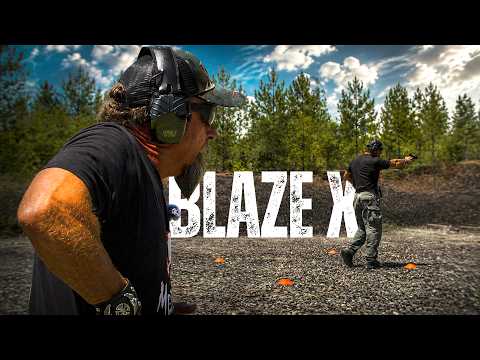
CQB Warmup

Published on June 30, 2026
Duration: 2:21

This video demonstrates a Close Quarters Battle (CQB) warmup drill focused on evaluating shooting performance under timed conditions. The instructor analyzes target hits, noting the distribution of Alphas, Charlies, and Deltas, and discusses the importance of meeting time standards and maintaining accuracy even with potential malfunctions. The drill serves as a comprehensive assessment of readiness and skill.


Quick Summary

A CQB warmup drill assesses firearms proficiency by measuring total time, total points, and hit factor. It emphasizes meeting time standards and maintaining accuracy, analyzing hit distribution (Alphas, Charlies, Deltas) for detailed performance feedback.

Chapters

  1. 00:00Drill Start and Initial Performance
  2. 00:25Second Stage Analysis
  3. 00:36Sloppy Execution Observation
  4. 00:48Slower Pace and Screen Analysis
  5. 01:10Hit Analysis: Alphas, Charlies, Deltas
  6. 01:21Target Difficulty and Overall Performance
  7. 01:24Total Time, Points, and Hit Factor
  8. 01:28Passing Time Standards and Transitions
  9. 01:36Drill Conclusion and Favorites

Frequently Asked Questions

What is the purpose of a CQB warmup drill?

A CQB warmup drill is designed to quickly assess and enhance a shooter's proficiency in speed, accuracy, and target engagement under timed conditions, ensuring readiness for tactical scenarios.

How is performance measured in a CQB shooting drill?

Performance is measured by a combination of factors including total time, total points scored, and the hit factor, which quantifies accuracy relative to time. The breakdown of hits (Alphas, Charlies, Deltas) also provides detailed feedback.

What are the key elements of a successful CQB warmup drill?

Key elements include meeting established time standards, maintaining a high level of accuracy (maximizing Alphas), and demonstrating smooth transitions between targets, even when dealing with potential equipment malfunctions.

Why is analyzing hit distribution important in shooting drills?

Analyzing hit distribution (Alphas, Charlies, Deltas) provides critical insight into the shooter's precision and control. A high number of Alphas indicates excellent accuracy, while Charlies and Deltas suggest areas needing improvement.

Related News

All News →

More Training & Techniques Videos You Might Like

More from T.REX ARMS

View all →