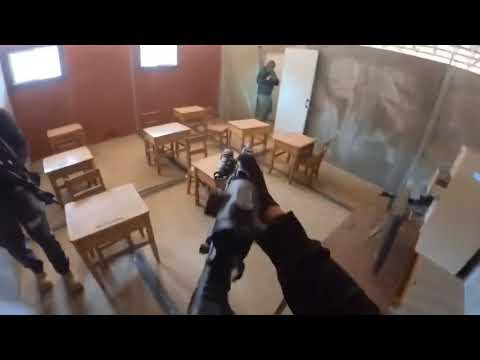
Gun Fight Footage + Instructor Commentary

Published on June 22, 2019
Duration: 17:16

This video provides expert commentary from John Lovell on raw footage from a tactical course in Tennessee. It details the realities of force-on-force training in a shoot house, highlighting the impact of 'fear stress' and critiquing common tactical errors in movement, cover usage, and engagement strategies. The instruction emphasizes the necessity of realistic practice for improving performance under pressure.

Quick Summary

John Lovell, a recognized subject matter expert, emphasizes that force-on-force training in a shoot house is vital for overcoming 'fear stress' and developing realistic combat skills. He critiques common errors like improper cornering, hallway dwelling, and hesitation, stressing constant mobility and proper cover usage.

Chapters

  1. 00:00Introduction and Context
  2. 01:25The Reality of the Shoot House
  3. 02:28Scenario Analysis: Pieing and Distance
  4. 04:53Active Killer and Hostage Scenarios
  5. 10:41Tactical Movement and Cover
  6. 12:14Solo Room Clearing Realities

Frequently Asked Questions

What is the primary benefit of force-on-force training in a shoot house?

Force-on-force training in a shoot house strips away range theatrics, exposing participants to the raw, chaotic reality of combat. This high-stress environment is crucial for developing practical skills and overcoming 'fear stress' that significantly impacts performance under pressure.
What are common tactical mistakes highlighted in shoot house training?

Common mistakes include staying in hallways too long, 'flagging' the weapon, failing to 'pie' corners correctly, improper use of cover, and hesitation in critical scenarios. Attempting solo room clearing with team tactics is also a major error.

How should one navigate doorways ('fatal funnels') during CQB?

Doorways are considered 'fatal funnels' due to their inherent vulnerability. Effective navigation requires constant mobility, careful shoulder transitions, and a deliberate approach to clearing the space beyond without lingering in the threshold.

What role does 'fear stress' play in tactical performance?

'Fear stress' significantly degrades performance, causing even skilled shooters to struggle. Realistic force-on-force training, like that conducted in a shoot house, is essential for learning to manage this stress and maintain effectiveness under duress.

Related News

All News →

More Training & Techniques Videos You Might Like

More from Warrior Poet Society

View all →