How Dangerous is a Bullet RICOCHET?! (vs Human Torso)

Published on December 15, 2022
Duration: 13:21

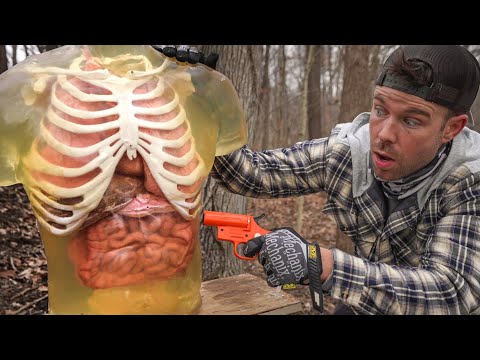
This video demonstrates the significant danger of bullet ricochets using a Ballistic Dummy Lab torso. The host, exhibiting high authority and expertise, tests various calibers (.375 H&H Magnum, 9mm, 5.56mm) against steel targets at both point-blank and glancing angles. The experiment highlights that ricochets, especially from larger calibers, can be lethal and unpredictable, underscoring the critical importance of strict range safety protocols.

Quick Summary

Bullet ricochets are extremely dangerous and potentially lethal, as demonstrated by testing various calibers against a ballistic dummy. The .375 H&H Magnum showed a significant capacity for causing lethal damage upon ricocheting, while 9mm and 5.56mm rounds also posed risks. This underscores the critical importance of adhering to stringent range safety protocols to mitigate unpredictable projectile behavior.

Chapters

  1. 00:00Introduction and Teaser
  2. 00:16Ricochet Mechanics
  3. 01:08Ballistic Dummy Overview
  4. 01:49Point-Blank Ricochet Setup
  5. 02:389mm and 5.56mm Point-Blank Tests
  6. 04:35.375 H&H Magnum Point-Blank Test
  7. 05:51Glancing Ricochet Experiment
  8. 09:20AR-15 Glancing Ricochet
  9. 10:46.375 H&H Magnum Glancing Ricochet
  10. 12:45Conclusion and Safety Warning

Frequently Asked Questions

How dangerous are bullet ricochets?

Bullet ricochets are extremely dangerous and potentially lethal. They are unpredictable and can deflect off surfaces like steel targets at high velocities, posing a significant threat to shooters and bystanders if proper range safety is not observed.

What calibers were tested for ricochet danger?

The video tested several calibers, including 9mm, 5.56mm/.223 Remington (with green tip steel core ammunition), and a powerful .375 H&H Magnum load (300 grain Dangerous Game Solid).

Does bullet type affect ricochet danger?

Yes, bullet construction and caliber significantly impact ricochet danger. Larger calibers like the .375 H&H Magnum can retain their integrity after deflection, causing massive wounds, while smaller, faster rounds may fragment, creating a wider area of impact.

What is the most important safety takeaway from ricochet testing?

The most crucial safety takeaway is the absolute necessity of strict range safety protocols. Understanding target angles, maintaining safe distances, and being aware of potential ricochet paths are paramount to preventing serious injury.

Related News

All News →

More Training & Techniques Videos You Might Like

More from 1ShotTV

View all →