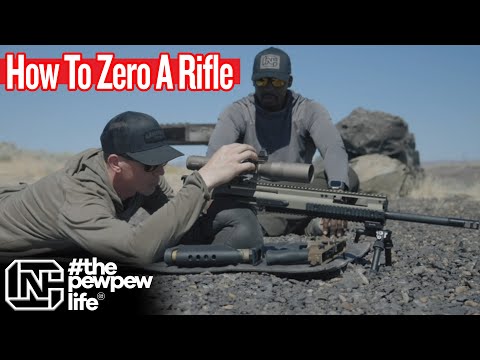
MOA vs MRAD Explained: How They Work & Which is Best!

Published on October 29, 2025
Duration: 19:21

This guide breaks down the angular measurement systems MOA and MRAD used in rifle optics. It explains their mathematical definitions, practical applications for aiming and ranging, and how to use them with turret adjustments. The video highlights MOA's traditional use, particularly among hunters, while MRAD is favored in modern competition for its decimal simplicity and ranging capabilities. It emphasizes matching reticle and turret systems for accurate shooting.

Quick Summary

MOA (Minute of Angle) is an angular measurement, approximately 1 inch at 100 yards, often used fractionally (e.g., 1/4 MOA clicks). MRAD (Milliradian) is a decimal-based system (e.g., 0.1 MRAD clicks), roughly 3.6 inches at 100 yards, favored for its simpler calculations in competition and ranging. Always match your reticle and turret units.

Chapters

  1. 00:00Introduction to MOA
  2. 00:27MOA Definition and Math
  3. 01:36MOA in Action
  4. 03:21Zeroing with MOA Turrets
  5. 04:13MOA in Red Dots
  6. 05:04Introduction to MRAD
  7. 05:40MRAD Definition and Math
  8. 06:52Ranging with MRAD
  9. 08:28Focal Planes and MRAD
  10. 11:16MOA vs. MRAD Comparison
  11. 16:35Decision Framework

Frequently Asked Questions

What is the practical difference between MOA and MRAD for rifle scopes?

MOA (Minute of Angle) is traditionally measured in fractions (like 1/4 MOA per click) and is common among hunters. MRAD (Milliradian) uses decimals (like 0.1 MRAD per click) and is favored in competition for easier calculations, especially for ranging targets quickly using its consistent 1:1000 ratio.

How do I calculate adjustments using MOA turrets?

MOA turrets adjust in increments like 1/4 or 1/2 MOA. To calculate clicks, determine the distance you missed by (in inches) and divide by the value of one click (in inches at that range). For example, to correct a 2-inch miss at 100 yards with 1/2 MOA clicks, you need 4 clicks up (2 inches / 0.5 inches per click).

Can I range targets with MRAD reticles, and how?

Yes, MRAD reticles are excellent for ranging. Use the formula: (Target Height in Inches x 27.77) / Mils subtended by the target = Range in Yards. This works best with First Focal Plane (FFP) scopes where the reticle scales with magnification.

What is the key difference between First Focal Plane (FFP) and Second Focal Plane (SFP) scopes regarding MRAD/MOA?

In FFP scopes, the reticle is in front of the magnification mechanism, so its size relative to the target changes with zoom. This means MRAD/MOA measurements are accurate at all magnifications. In SFP scopes, the reticle is behind the magnification mechanism; its size stays constant, making MRAD/MOA measurements accurate only at specific zoom levels.

Related News

All News →

More Training & Techniques Videos You Might Like

More from AT3 Tactical

View all →