What is MOA? Minute of Angle Explained for Long-Range Shooting | Ryan Cleckner

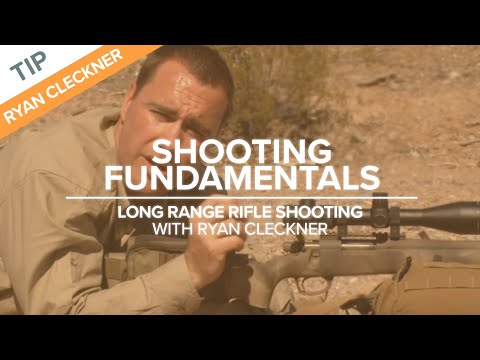
This video explains Minute of Angle (MOA) for long-range shooting, presented by former special operations sniper Ryan Cleckner. It details how MOA is an angular measurement that translates to approximately 1 inch at 100 yards, with its linear value increasing proportionally with distance. The guide emphasizes practical application through 'chunks' and discusses trajectory adjustments, including the counter-intuitive need to adjust 'up' for very close targets.

Quick Summary

Minute of Angle (MOA) is an angular measurement where 1 MOA equals 1/60th of a degree. It translates to approximately 1.047 inches at 100 yards, with its linear size increasing proportionally with distance. This allows shooters to make consistent adjustments based on distance, often by thinking in 'chunks' of MOA.

Chapters

  1. 00:00Introduction to MOA
  2. 00:22Defining Minute of Angle
  3. 01:24Angular vs. Linear Measurement
  4. 03:55Practical Application: 'Chunks'
  5. 07:47Trajectory and Zeroing Explained

Frequently Asked Questions

What is Minute of Angle (MOA) in shooting?

Minute of Angle (MOA) is a unit of angular measurement used in shooting. One MOA is 1/60th of a degree. It translates to approximately 1.047 inches at 100 yards, meaning its linear size increases proportionally with distance.

How does MOA relate to distance in long-range shooting?

MOA is an angular measurement, so its linear size changes with distance. At 100 yards, 1 MOA is about 1 inch. At 200 yards, it's about 2 inches, and at 600 yards, it's about 6 inches. This allows for consistent adjustment calculations.

Why is zeroing at 100 yards standard practice?

Zeroing at 100 yards is standard because it simplifies adjustments for longer ranges. It ensures that most subsequent adjustments needed will be 'up' to compensate for bullet drop, making the process more intuitive.

What is the practical application of MOA for shooters?

Shooters can use MOA by thinking in 'chunks' relative to distance. For example, at 600 yards, 1 MOA is a 6-inch spread. If a shot is 12 inches low, you need to adjust 2 MOA up (two 6-inch chunks).

Related News

All News →

More Training & Techniques Videos You Might Like

More from NSSF—The Firearm Industry Trade Association

View all →